

 Español
 عربى
عربىFabric behavior under the needle determines far more about production quality than most buyers initially expect, and matching fabric type to an industrial flat-bed sewing machine setup involves considerations that go well beyond simply confirming the machine can physically accept the material.
Woven Fabrics And Straight Seam Stability
Woven fabrics represent the most common material category running through flat bed equipment, since the flat working surface complements the stable, non-stretch nature of woven cloth particularly well. An industrial flat-bed sewing machine handling cotton, linen, or polyester weaves typically runs with standard tension settings, since woven fabric holds its shape consistently as it passes across the bed without the shifting or stretching that knit fabrics introduce. What adjustment does an operator make when switching between different woven weights? Presser foot pressure usually needs recalibration between lightweight shirting fabric and heavier canvas or denim, since excessive pressure on lighter weaves can leave visible foot marks along the seam line.
Knit Fabrics And Feed Mechanism Demands
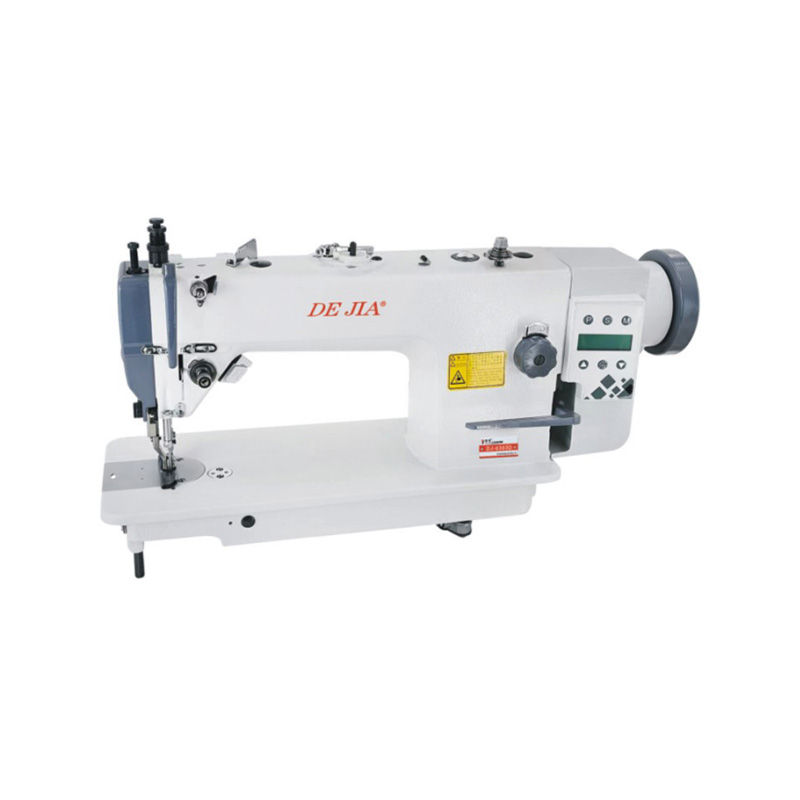
Knit fabrics introduce a different challenge entirely, since their inherent stretch can cause puckering or wavy seams if the feed mechanism does not compensate properly. A flat bed sewing machine configured for knit production typically includes a differential feed system, allowing the operator to adjust how quickly fabric moves through the front versus back feed dogs, correcting for the stretch tendency that plain woven fabric simply does not exhibit. Which knit garment categories depend most on this differential feed capability? T-shirts, athletic wear, and stretch-knit dresses rely heavily on correctly calibrated differential feed, since visible puckering along a knit seam becomes an immediate quality rejection in most finished garment inspections.
Heavyweight And Coated Materials
Canvas, denim, and coated or laminated fabrics used in outerwear and technical textile production place different demands on an industrial flat bed sewing machine, primarily around needle selection and motor torque. Coated fabrics, in particular, can build up residue on standard needles faster than uncoated woven material, leading to skipped stitches if the needle type is not matched appropriately to the coating chemistry involved. Where does this residue buildup cause the most production disruption? Continuous long-seam runs on coated outerwear panels, since a skipped stitch partway through a long seam often requires unpicking and resewing the entire section rather than a simple spot repair.
Lightweight And Delicate Fabrics
Sheer, delicate fabrics such as chiffon or fine silk blends require the opposite adjustment approach compared to heavyweight material. A flat bed sewing machine running these fabrics typically operates at reduced speed with a finer needle and lighter thread tension, since aggressive feed speed or excessive tension can pucker or tear delicate material almost immediately. Who typically makes these speed and tension adjustments on a production floor? Experienced operators usually handle this calibration themselves at the start of a shift, adjusting settings based on the specific fabric batch running through their station that day, since even fabric from the same supplier can show slight weight or texture variation between production lots that affects optimal machine settings.
Blended And Specialty Textile Combinations
Blended fabrics, combining natural and synthetic fibers, sometimes behave unpredictably under standard settings calibrated for either pure fiber type alone. An industrial flat bed sewing machine processing a cotton-polyester blend, for instance, may need tension settings that split the difference between pure cotton and pure polyester calibration, since blended fiber behavior does not always average neatly between the two parent fiber characteristics. Production floors running frequent fabric changeovers typically maintain reference settings for their most common blend ratios, reducing the trial-and-error adjustment time that would otherwise slow down changeover between different fabric batches scheduled across a single production day.
