Sewing machine parts are the "organs" of industrial sewing equipment—without them, even the good machine is just an empty shell. They encompass all replaceable and upgradeable components, from needles to motors, from feed mechanisms to control systems, and fall into two main categories:
- Consumables: These parts inevitably wear out or are consumed after a certain period of use and require regular replacement. Examples include needles, rotary hooks, bobsleigh cores, presser feet, feed dogs, and needle plates. The replacement frequency of these parts directly determines the machine's effective operating time.
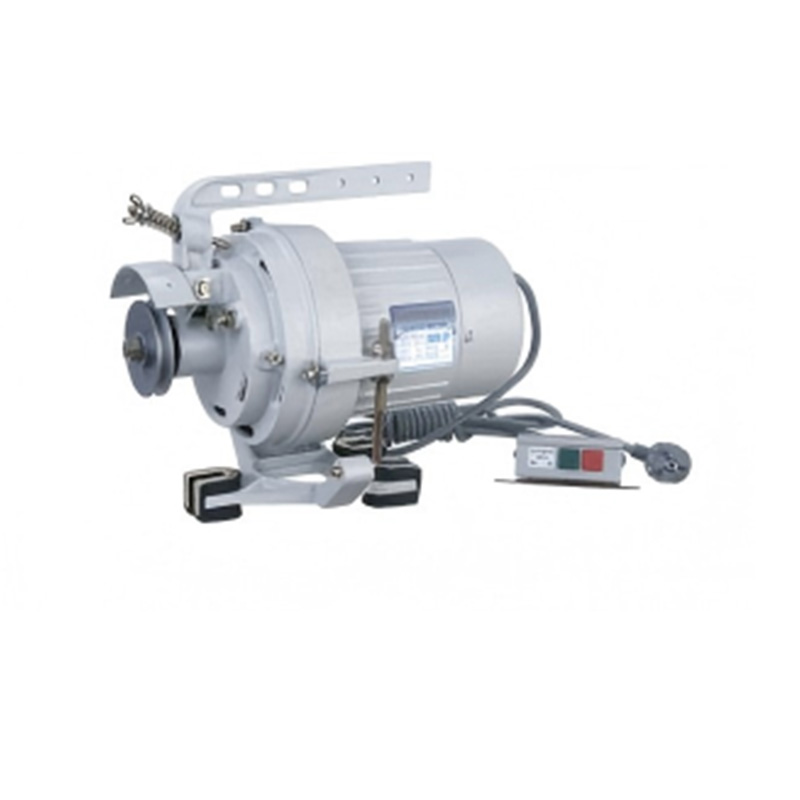
- Upgrades: These parts are used to improve machine performance or expand functionality, such as replacing clutch motors with servo motors, adding automatic thread trimming devices, upgrading CNC systems, and installing dedicated presser feet/clamps. The return on investment for these parts typically ranges from several months to a year.
Application Scenarios of Sewing Machine Parts
1. Garment Manufacturing Plants
- Daily Maintenance: Weekly check for thread buildup in the rotary hook area; monthly replace worn needle plates; quarterly calibrate feed dog height.
- Product Switching: By replacing specialized presser feet (e.g., roller presser feet for smooth PU, synchronous presser feet for thicker materials, zipper presser feet for edge binding) and feed dogs, the same machine can be quickly adapted to different fabrics and processes.
2. Footwear and Bag Manufacturing
- Thick Material Processing: By replacing the presser feet with larger needles (DP×5 series), larger-aperture needle plates, and larger-capacity rotary hooks, standard models can penetrate 5mm-14mm thick leather/canvas.
- 3D Stitching: By adding specialized clamps (Jig/Clamp) and irregularly shaped presser feet, it can adapt to the 3D workpiece stitching needs of column-type and cylindrical sewing machines.
- Thick Thread Adaptation: When using V277 or V415 thick thread, it is necessary to use extra-large rotary hooks (2-3 times the capacity of ordinary thread) and thicker needles; otherwise, frequent thread breaks and thread changes will severely reduce production capacity.
3. Automotive Interiors
- High-Precision Maintenance: Needle plate aperture, rotary hook clearance, and feed dog height must be accurate to the 0.1mm level. Any deviation will result in inconsistent stitches, affecting customer acceptance.
- Automation Upgrade: Adding automatic thread trimming, automatic presser foot lifting, and bobbin thread detection sensors reduces manual intervention and improves the stability of 24/7 continuous operation.
- IoT Integration: Replacing control modules and sensors with network-enabled ones enables predictive maintenance, providing early warnings before malfunctions occur.
4. Home Textiles and Outdoor Products
- Long Sewing Operations: Continuous sewing of large tents and sails places extremely high demands on rotary hook bobbin capacity. Upgrading to a larger capacity bobbin can reduce downtime for thread changes by more than 50%.
- Thicker Thread Reinforcement: Sewing FIBC bags and lifting slings uses #207 and #277 thicker thread, requiring dedicated rotary hooks, thicker needles, and reinforced feed mechanisms.
5. Sewing Machine Repair and Refurbishment Services
- Complete Refurbishment: Replacing all easily worn parts (hook, needle plate, presser foot, feed dog, belt, motor) on a used machine, restoring it to near-new performance.
- Emergency Repair: Maintaining a stock of core spare parts such as hooks, needles, belts, and motors to ensure malfunctioning machines are back in operation within hours.
6. Small Workshops and Custom Studios
- Functional Expansion: By changing presser feet and accessories, enabling rapid switching from flat stitching to overlocking, from straight lines to zigzag stitches, and from thin to thick fabrics.
- Energy Saving Retrofit: Replacing the clutch motor of older household or light industrial sewing machines with a servo motor, reducing noise and electricity costs while improving operational precision.
Reasons for Purchasing: Why Buy?
1. The quality of spare parts directly determines the quality of the finished product
Selecting the wrong needle type (e.g., using a DB×1 needle to sew leather) can lead to skipped stitches and fabric damage; a 0.1mm deviation in hook gap can cause loose stitches and exposed bobbin thread; a worn tension disc can cause unstable thread tension and wrinkles. These seemingly minor issues accumulate into large quantities of defective products, customer returns, and damage to brand reputation. High-quality components are the first line of defense in quality control.
2. Servo Motors: Triple Benefits of Energy Saving, Precision, and Quiet Operation
Replacing traditional clutch motors with servo motors offers:
- 70%-90% Energy Savings: Based on industrial electricity prices, a single machine can save hundreds to thousands of yuan annually in electricity costs.
- Precise Control: Needle positioning, adjustable speed, and high torque at low speeds, suitable for delicate operations and starting stitches on thick materials.
- Quiet Operation: Improves the factory environment and meets occupational health noise standards.
- Maintenance-Free: No carbon brush wear, reducing replacement and maintenance frequency.
The return on investment period is typically 6-12 months; for clusters of 10 or more machines, the annual electricity savings are considerable.
3. Automatic Thread Trimming/Pressure Foot Lifting: Saves 4-5 Hours of Auxiliary Labor Time Daily
Automatic thread trimmers save 3-5 seconds per process, automatic pressure foot lifting reduces operator bending, and bottom thread detection sensors prevent empty stitches and scrap. These features can save 4-5 hours of auxiliary labor per machine per day. In the context of skilled worker shortages and rising labor costs, this directly reduces reliance on manual labor while increasing productivity.
4. Dedicated Presser Feet/Feed Dogs: Key to Multi-Functionality
The versatility of industrial sewing machines largely depends on the compatibility of their accessories. By stocking presser feet with different functions (roller presser feet, synchronous presser feet, zipper presser feet, tubular presser feet, overlock presser feet) and feed dogs (coarse dogs, fine dogs, leather dogs, knitting dogs), the same machine can be used for jeans in the morning, leather bags in the afternoon, and tents in the evening, big equipment utilization and reducing the need for specialized equipment purchases.
5. Predictive Maintenance: From "Repairing After It Breaks Down" to "Prevention"
The modern accessories market already offers IoT-enabled sensors and control modules that can monitor in real time:
- Motor temperature and load
- Hook wear
- Thread tension fluctuations
- Abnormal vibration
Frequently Asked Questions
Q1: How to choose between original parts and compatible parts?
A: For core moving parts (such as the rotary hook, main shaft, and control board), it is recommended to prioritize original equipment manufacturer (OEM) or high-quality compatible parts, as precision requirements are extremely high. For consumable parts (such as needles, belts, and ordinary presser feet), more cost-effective compatible parts can be selected.
Q2: Is there really a big difference between servo motors and clutch motors?
A: The difference is significant. Clutch motors are "on/off" controlled, with fixed speed, high noise, high power consumption, and carbon brushes that need to be replaced regularly. Servo motors are frequency converter controlled, with stepless speed adjustment from 0 to big speed, strong torque even at low speeds, quiet operation, 70%-90% power saving, and almore maintenance-free.
Q3: Does the installation of accessories require professional technicians?
A: Simple replacements (such as changing needles, presser feet, and belts) can be completed independently by trained operators. Precision adjustments (such as rotary hook gap calibration, feed dog height adjustment, and needle position timing calibration) are recommended to be performed by certified maintenance technicians, as an error of 0.1mm can lead to batch scrap.


 Español
 عربى
عربى