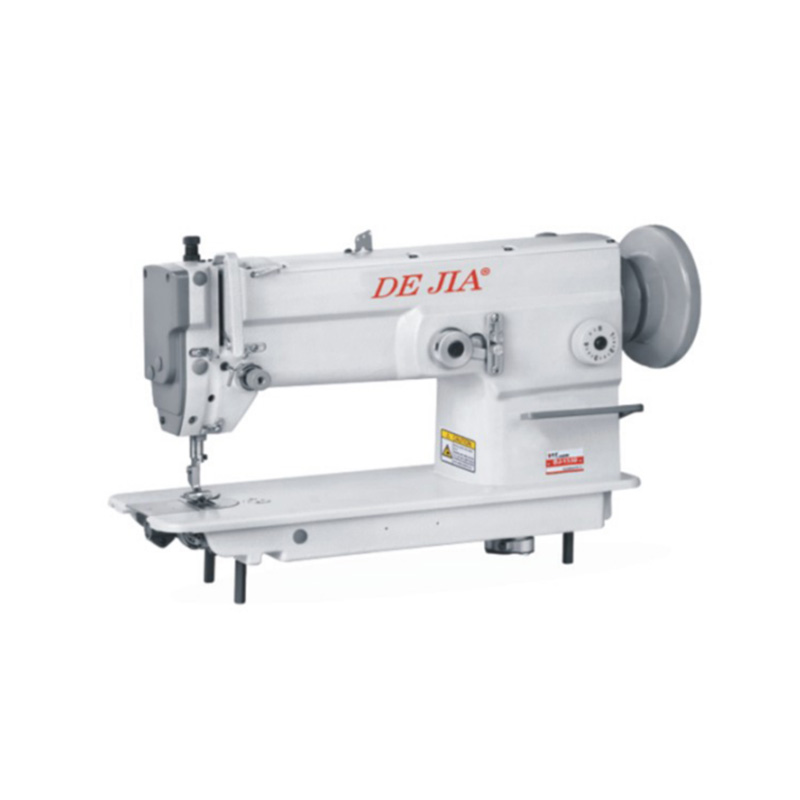
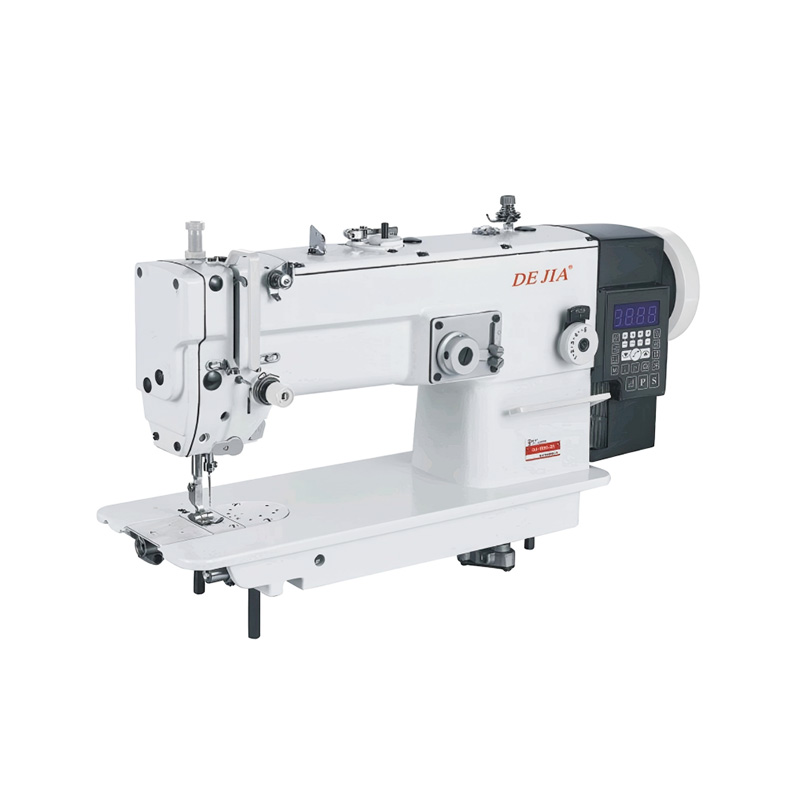
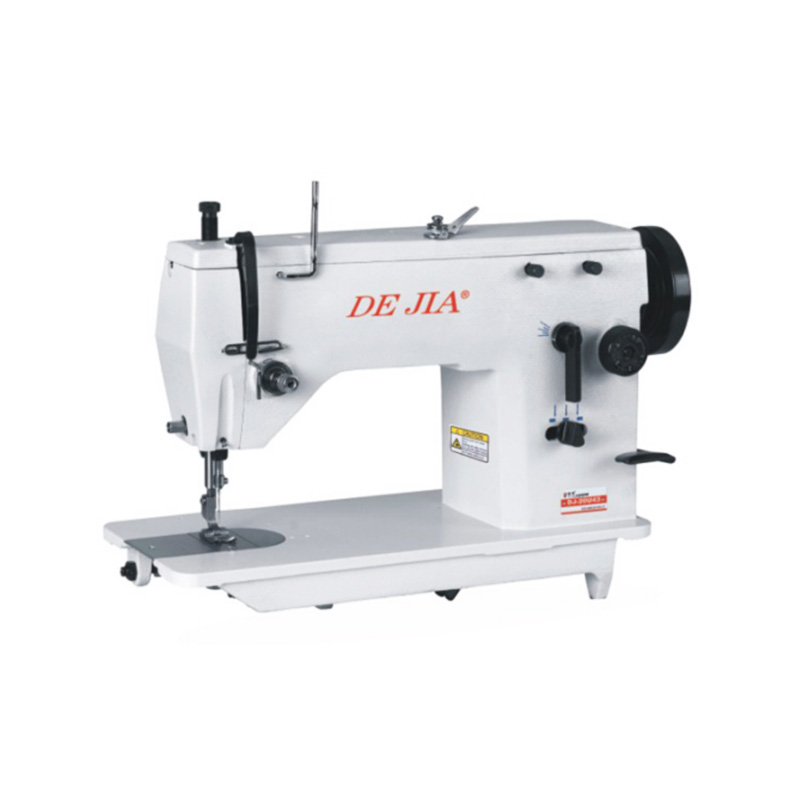
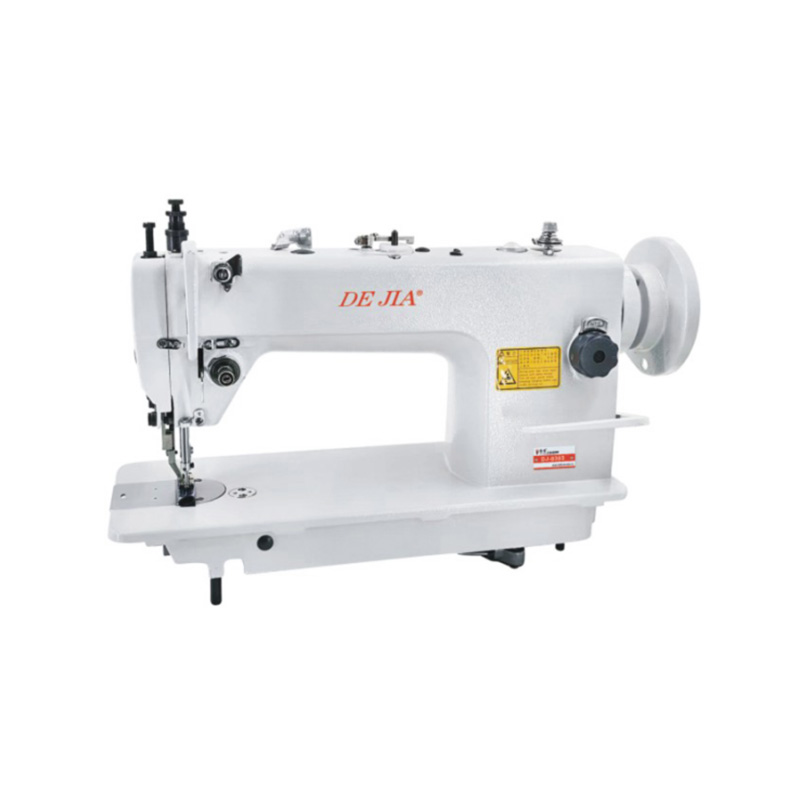
A zigzag sewing machine is an industrial-grade sewing device that uses a needle bar to swing left and right, creating a continuous "Z"-shaped stitch on the fabric. Unlike a straight-line sewing machine, which stitches in a continuous line, the zigzag stitch weaves back and forth horizontally, creating a serrated or wavy seam path.
The core value of this stitch lies in its elasticity and tear resistance—when the fabric is stretched, the zigzag stitch can stretch like a spring, rather than breaking stiffly like a straight stitch. Therefore, it is called "breathable thread."
Based on the control method, it can be divided into:
- Mechanical cam type: This type achieves 2-point, 3-point, and 4-point zigzag stitches by changing cam templates. It has a simple structure, low maintenance costs, and is suitable for mass production of fixed styles. Cam replacement is convenient, and standard models typically come with 2-step, 3-step, and 4-step cams.
- Electronic numerical control (CNC): Microprocessor controls the needle bar movement trajectory, storing over 99 sewing patterns, supporting up to 500 stitches per pattern, suitable for flexible production of multiple varieties in small batches.
- Fully automatic computerized: Integrates automatic thread trimming, automatic presser foot lifting, and automatic reverse stitch reinforcement, supports IoT remote monitoring, suitable for unmanned or semi-unmanned production lines.
- Further subdivided by functional strength:
- Standard type: Suitable for thin to medium thickness fabrics, with a big bend width typically 8-10mm, and sewing speeds up to 5,000 stitches/minute.
- Heavyweight type: Designed for heavy-duty threads (such as V277, Tex 400, 1.2mm braided thread), equipped with an extra-large rotary hook and bobbin, increased needle bar travel, and a big bend width of up to 16mm, capable of penetrating 7mm thick multi-layer canvas, leather, or Dacron/Kevlar composite materials.
- Long-arm type: Working space exceeding 735mm, designed for oversized workpieces such as sailboat sails, large tents, and hot air balloons.
Application Scenarios of Zigzag Sewing Machines
1. Elastic Fabrics and Knitted Apparel
- Sportswear/Yoga Wear/Swimwear: Knitted fabrics can stretch to 30%-50%, causing straight seams to fray. Zigzag seams extend synchronously with the fabric, maintaining seam integrity.
- Underwear/Socks: For sewing and embellishing high-elastic spandex fabrics, 3-point or 4-point zigzag seams create wider and stronger elastic seams.
- T-shirts/Polo Shirts: For reinforcing hems and cuffs to prevent fraying.
2. Sailing and Outdoor Gear
- Sailboat Sails: For splicing and reinforcing cruise sails, racing sails, and spinnakers. Specialized models (such as the Adler 525) use parallel vertical needle bar movement, combined with an oversized rotary hook, to handle 7mm thick Dacron/Kevlar canvas. Thick thread is used for stitching to ensure the structural strength of the sail in strong winds.
- Tents/Tannels/Awnings: Seam stitching for large membrane structure materials requires extremely high strength and weather resistance.
- Sleeping Bags/Backpacks/Hiking Boots: Thick-thread zigzag stitches provide the necessary durability to withstand the pulling and abrasion of harsh outdoor environments.
3. Automotive Interiors and Aircraft Seats
- Automotive Seat Leather Upholstery: Thick-thread zigzag stitches are used for leather splicing and decorative stitching. The rugged lines add texture while ensuring long-term crack resistance.
- Door Panel Covers/Dashboards: Edge stitching of thick fabric pieces is beyond the capabilities of ordinary sewing machines; thick-thread zigzag stitches can penetrate multiple layers of composite materials.
- Yacht Interiors: Stitching of suede materials and leather trim in high-end vehicles.
4. Furniture Upholstery and Leather Goods
- Leather Sofas/Chairs: Thick-thread zigzag stitches are not only structural stitching; their exposed, rugged stitches have become a design element in modern furniture, enhancing product quality.
- Handbags/Belts/Wallets: Decorative stitching on high-end leather goods; unique stitching styles can become part of the brand identity.
- Luggage/Trolley Cases: Reinforced seams of multi-layered materials, thick thread ensures no breakage in load-bearing parts.
5. Safety and Industrial Supplies
- Firefighter Uniforms/Rescue Vests: High abrasion resistance requirements, thick thread zigzag stitches ensure seams do not tear under extreme conditions.
- Work Clothes/Protective Equipment: Seam strength directly affects wearer safety.
- Fishing Nets/Sports Nets/Cargo Nets: Specialized models equipped with piping feet can secure ropes to the edge of the net or complete reinforced stitching for rope end tacking.
6. Home Textiles and Decoration
- Curtains/Sofa Covers: Neat and aesthetically pleasing edges, extending service life.
- Carpets/Floor Mats: Heavy-duty zigzag machines can join multiple carpet pieces together or complete the edging of thick carpets.
Purchasing Reasons: Why Buy?
1. One Process Solves Three Major Problems: Sewing + Anti-Fragging + Decoration
Zigzag stitching machines simultaneously perform structural sewing, edge anti-fragging (replacing overlock machines), and aesthetic decoration. For knitted fabrics, no additional overlock sewing equipment is needed, reducing investment in production line equipment.
2. Flexible seams reduce after-sales return rates
Knitted fabrics, spandex, and elastic denim, when sewn with straight lines, will develop tears and holes after only a few wears. The elastic stitches of zigzag sewing can stretch synchronously with the fabric, solving the more common garment quality problem—seam breakage—from the source, reducing repair and customer complaint costs.
3. Heavy-duty, thick-thread machines
The entry ticket to the thick-material market. Canvas, leather, and multi-layer composite materials are high-profit niche markets, but ordinary flat sewing machines cannot penetrate them. Heavy-duty zigzag sewing machines (such as those equipped with V277 thick thread and 1.2mm braiding thread capability) can directly enter fields such as sailboat manufacturing, automotive interiors, and high-end leather goods, expanding product lines and customer base.
4. Cam/CNC dual-mode: Flexible response to order fluctuations
- Mechanical cam type: Cam replacement is simple, suitable for long-term stable good-selling orders, with low equipment cost and easy maintenance.
- Electronic numerical control: Stores 99 patterns, 500 stitches per pattern, suitable for diverse needs such as cross-border e-commerce, small-batch customization, and designer brands, with zero debugging time for pattern changes.
5. Automation reduces reliance on skilled workers
Modern industrial zigzag machines commonly integrate:
- Automatic thread trimming: Eliminates manual thread trimming, saving 3-5 seconds per process.
- Automatic presser foot lift: Reduces operator bending and fatigue.
- Automatic back tapping: Ensures secure start and end points, preventing manual over-tapping.
- Needle up/down: Precise needle stop, facilitating cornering and fabric repositioning.
Industry estimates suggest these automation functions can save 4-5 hours of auxiliary work time per machine daily, directly reducing labor costs in a market with a shortage of skilled sewing workers.
6. Thick thread adaptation
Reduces downtime for thread changes. Heavy-duty models are equipped with extra-large rotary hooks and bobbins (2-3 times the capacity of ordinary models), significantly reducing the frequency of bobbin changes when using thicker threads. For long seams such as sailboat sails and large tents, reducing the number of thread changes means more effective sewing time.
7. Decorative Stitches Enhance Product Value
3-point and 4-point zigzag stitches can create more complex wave or geometric patterns, used for decorative stitching in women's clothing, scarves, handkerchiefs, and swimwear. A unique decorative stitch can be the key differentiator that upgrades a product from "mass-market" to "designer style."
Frequently Asked Questions
Q1: What is the difference between zigzag stitches and overlock stitches? Can they be substituted for each other?
A: They cannot be simply substituted for each other. Overlock stitches are mainly used for edge binding to prevent fraying, with the stitches hidden inside; zigzag stitches can prevent fraying and can also be used as exposed structural or decorative seams. For knitted fabrics, zigzag stitches can replace overlock stitches for elastic seams, but the edge binding effect is not as good as with a professional overlock machine. It is recommended to decide based on the main products: choose a zigzag machine for elastic structural seams and an overlock machine for edge binding.
Q2: What do 2-point, 3-point, and 4-point zigzag stitches mean? How to choose?
A: The numbers represent the number of needle points in a complete zigzag cycle:
- 2 points (1-step): The simplest herringbone pattern, suitable for basic elastic stitching.
- 3 points (2-step): An extra stitch in the middle provides reinforcement, increasing strength, suitable for stressed areas.
- 4 points (3-step): Widest and densest, offering the strongest decorative effect, suitable for women's wear, swimwear, etc.
Selection suggestions: Choose 2 points for basic knitwear; choose 3 points for outdoor gear and automotive interiors; choose 4 points for fashion embellishments and high-end home textiles. Mechanical cam-type machines typically come standard with three types of cams, which can be switched according to orders.
Q3: Are heavy-duty zigzag machines much more expensive than standard models?
A: Heavy-duty heavy-duty machines are about 1.5-2 times more expensive than standard models, but they open up entirely different markets—the unit price and profit margin of sailing equipment, automotive interiors, and high-end leather goods are far higher than those of ordinary clothing. If your customer base includes these sectors, or you plan to expand to large B2B clients (such as car seat suppliers or outdoor brand OEM manufacturers), a heavy-duty machine is a necessary investment.
Q4: How to choose between a servo motor and a clutch motor?
A: We strongly recommend a servo motor. Compared to a traditional clutch motor, a servo motor offers:
- Silent operation (meets factory noise compliance requirements)
- Energy savings of 70%-90% (significant long-term electricity cost difference)
- Controllable speed (less likely to produce defective products for novice operators)
- No need to replace carbon brushes (reduces maintenance costs)
Weight reduction of approximately 1/3 (facilitates workshop layout adjustments) Currently, servo motors are the mainstream configuration in the industrial zigzag machine market, while clutch motors are only found in very low-end models or the second-hand market.
Q5: What is the big width of the zigzag seam? How does it affect procurement?
A: The big zigzag width for standard models is typically 8-10mm, while heavy-duty models can reach 16mm. The wider the seam, the more complex the machine structure and the higher the price. Before purchasing, you need to confirm the big stitch width required for your product—for example, 8mm is sufficient for ordinary clothing, but reinforcing webbing for sailboat sails or carpet splicing may require 16mm. Choosing the wrong specification can lead to unfilled orders or idle equipment later.


 Español
 عربى
عربى