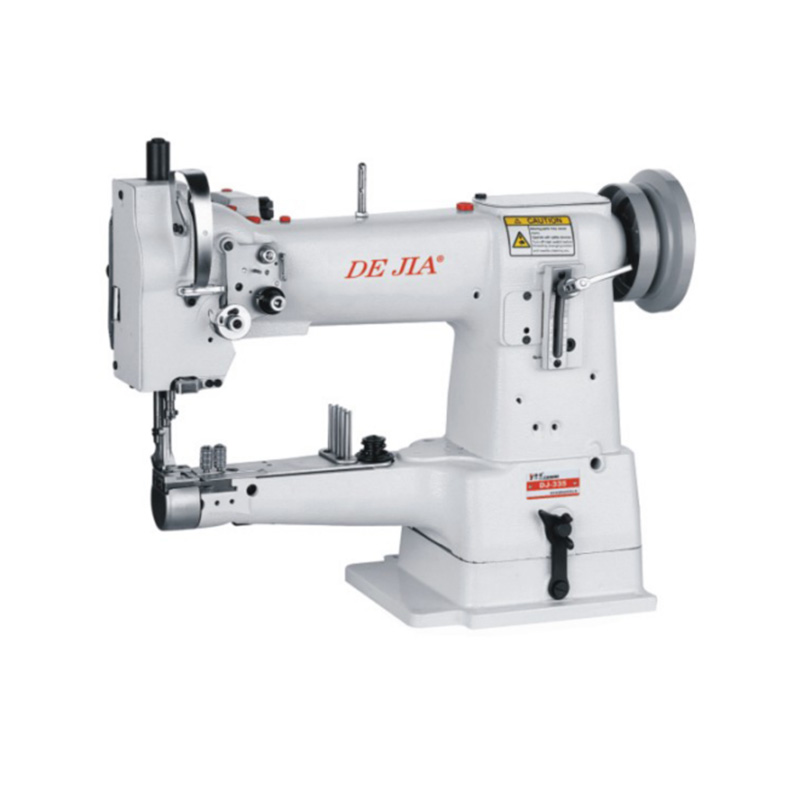
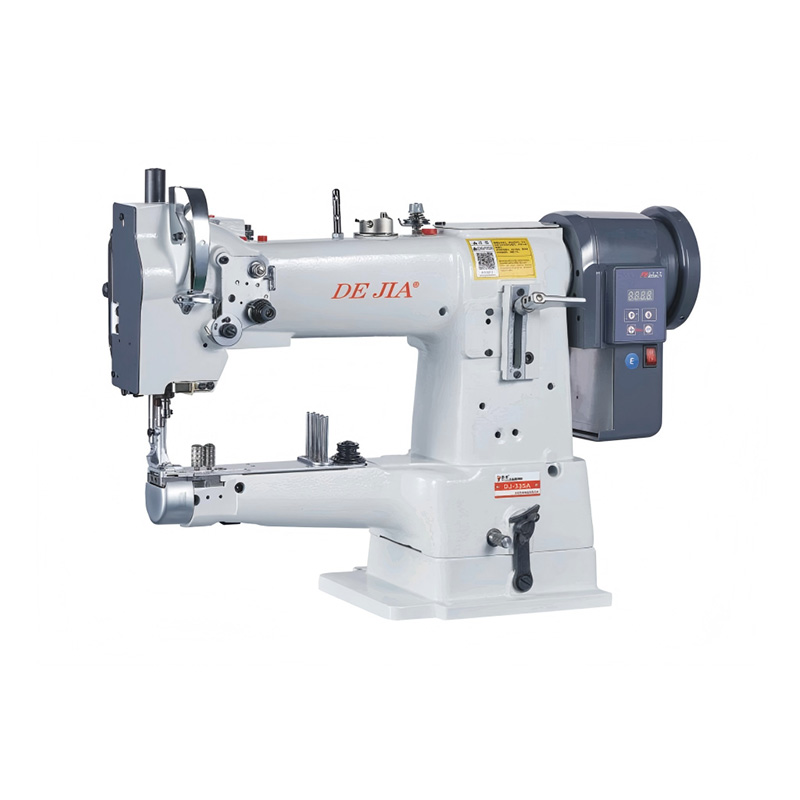
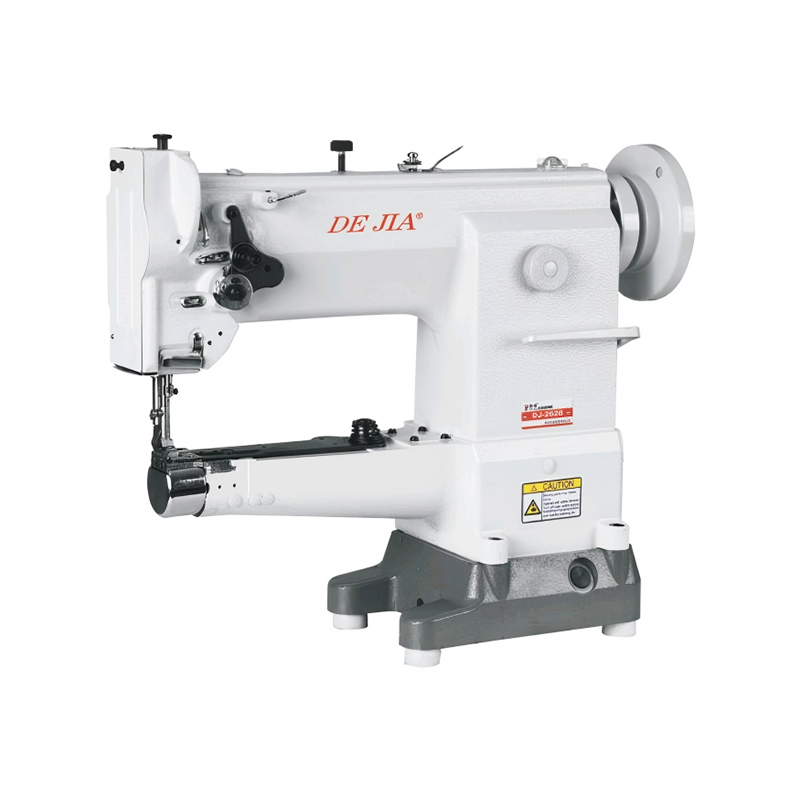
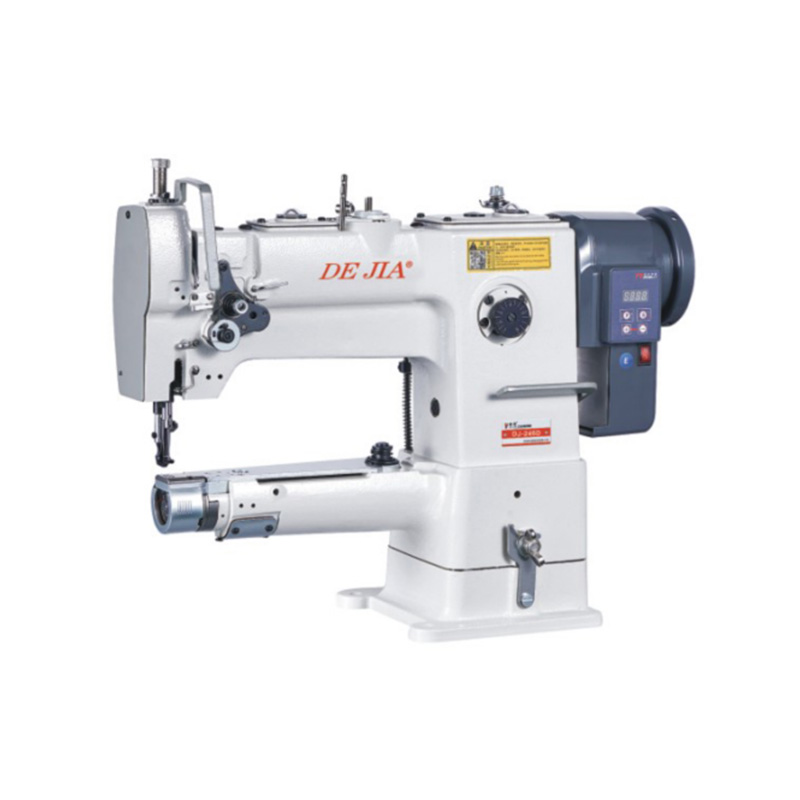
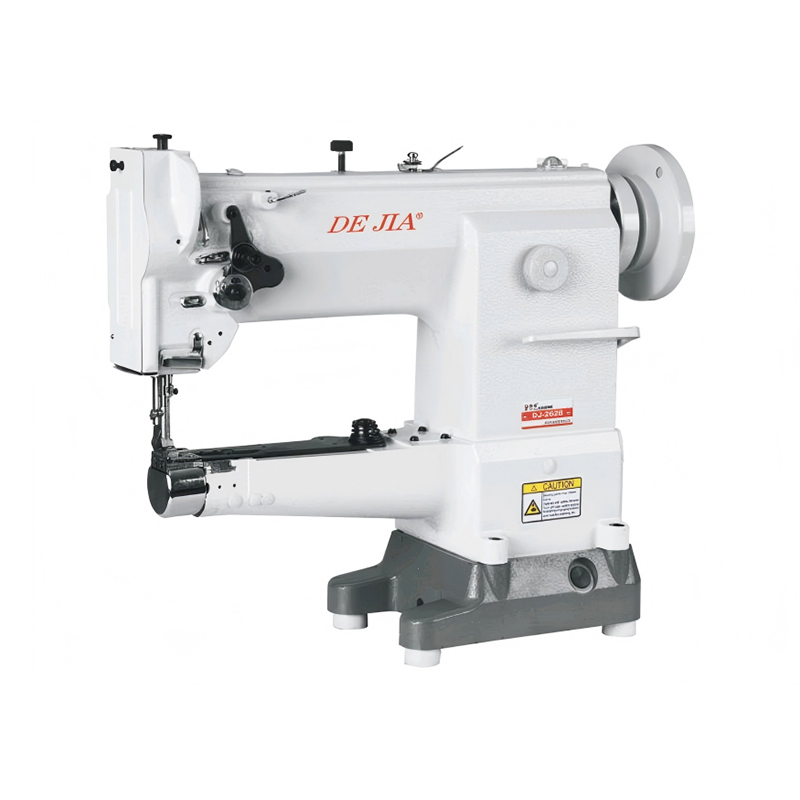
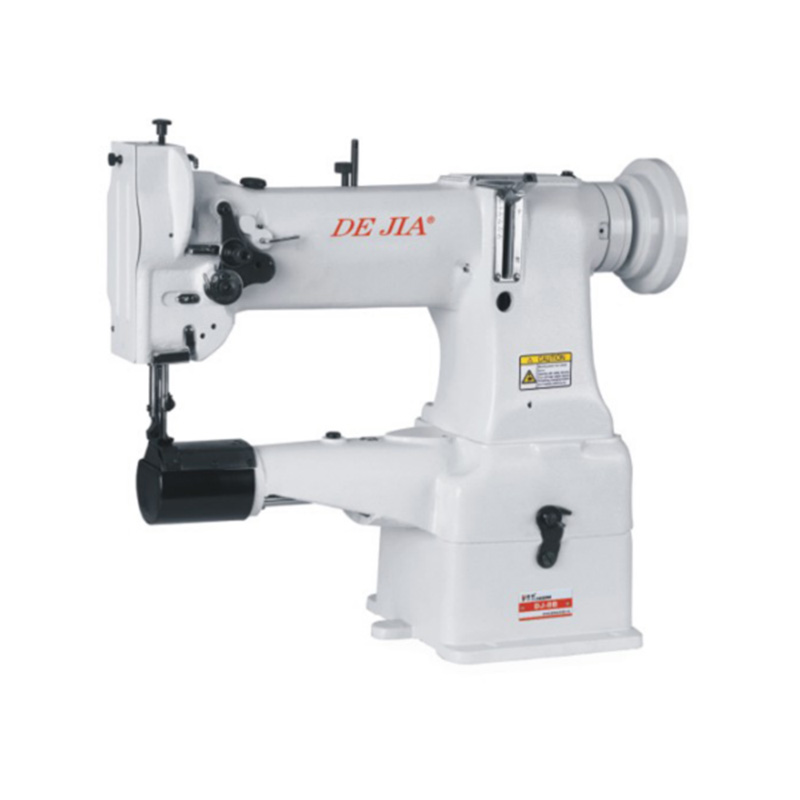
Cylinder bed sewing machines replace the traditional platform with a horizontally extending cylindrical arm. The arm diameter is typically 100–150 mm. Fabric is threaded along the arm's axis and then rotated for sewing. It is a core industrial piece of equipment for the mass production of tubular or cylindrical workpieces such as suitcases, trouser legs, cuffs, and boot shafts.
What is a Cylinder Bed Sewing Machine?
The more distinctive feature of a cylinder bed sewing machine is a horizontal cylindrical arm extending from below the sewing head. The rotary hook and feed teeth are located at the arm's end. The operator threads the pre-formed tubular workpiece—such as trouser legs, suitcase trim, or boot shafts—through the open end of the arm and rotates it along the arm to complete a closed sewing process. The workpiece does not need to be flattened or opened during the entire process.
Unlike post bed sewing machines, the cylinder bed sewing machine's arm extends horizontally, making it more suitable for laterally threading tubular workpieces. The workpiece's center of gravity is stable during operation, making it suitable for high-speed continuous production. The arm length is typically 250–500 mm. The arm diameter determines the small opening size that can be fitted onto the workpiece, and is the first parameter to check when selecting a model.
Application Scenarios of Tube-Type Sewing Machines
Seaming the main frame fabric, inner lining tube openings, and wheel covers of trolley cases is one of the more typical applications of tube-type sewing machines. After the case body is formed, the frame fabric is already tubular and cannot be laid flat; it must be fitted onto the arm for sewing. Heavy-duty tube-type composite feeders, combined with wear-resistant presser feet, can reliably handle commonly used wear-resistant materials such as 1680D nylon and PVC composite fabric for cases.
- Pants Leg and Cuff Seaming
Seaming the bottom of the legs and closing the cuffs of jeans, dress pants, and sweatpants are core processes for tube-type sewing machines in the garment industry. Standard arm diameters (approximately 100–120 mm) are suitable for adult pants, while narrow-arm models are suitable for children's pants or slim-fit pants. High-efficiency single-cylinder sewing machines can achieve a capacity of 800–1,200 pieces or more per shift in these processes.
- Boot shafts and high-top shoes
The sewing of the shafts of riding boots, work boots, and snow boots requires a sewing arm that can reach deep into the shaft. Long-arm cylinder sewing machines (arm length 400 mm or more) are specialized configurations for high-top boots, allowing for complete sewing along the circumference of the shaft without manual folding.
- Backpack shoulder straps and tubular accessories
For processes requiring stitching and securing pre-formed tubular accessories such as backpack shoulder straps, waist bag tubular handles, and functional bag tubular compartments, cylinder sewing machines avoid disassembling and re-sewing the straps, significantly improving efficiency.
- Gloves and knitted glove openings
The wrist openings of industrial gloves and the finger seams of knitted gloves require narrow-arm sewing machines (arm diameter ≤ 75 mm). Narrow-arm cylinder sewing machines are specialized industrial equipment for this type of fine tubular opening sewing, offering significantly higher capacity and precision than hand sewing.
- Round Industrial Products
Non-clothing industrial products such as fire hose connector covers, cylindrical filter bags, and industrial tubular sealing gaskets also rely on tube sewing machines for pipe end stitching. This is a frequently overlooked high-frequency demand in industrial sewing machine procurement.
Reasons for Procurement
- Only Feasible Industrial Solution for Tubular Workpieces
Pre-formed tubular workpieces such as trouser leg seams, suitcase frame edges, and boot top closures cannot be processed on flatbed sewing machines due to their physical structure. Tube sewing machines are the only industrial machine type capable of performing these processes, making their procurement necessity irreplaceable and the decision-making path clear.
- Significant Advantages in High-Efficiency Continuous Production
The horizontally extended arm of the tube sewing machine ensures a stable center of gravity after the workpiece is inserted. The operator can smoothly rotate the workpiece to complete continuous stitching. Compared to manual sewing, which requires frequent adjustments to the workpiece orientation, the daily output of a single standard tube sewing machine is typically 6–10 times that of manual processes, making it a standard efficiency-enhancing tool for trouser leg stitching in garment factories.
- Wear-Resistant Configuration Extends Maintenance Cycles
High-strength fabrics (1680D nylon, Cordura, thick canvas) used in products such as suitcases, tooling, and military supplies cause rapid wear on presser feet and needle plates. Heavy-duty cylinder presses equipped with wear-resistant coated presser feet and hardened needle plates can extend replacement cycles by 2–3 times compared to standard configurations, directly reducing consumable procurement frequency and downtime.
- Arm Specifications Can Be Precisely Matched to Product Lines
Thin-arm presses (arm diameter 50–75 mm) are suitable for gloves and children's clothing; standard presses (arm diameter 100–130 mm) are suitable for adult clothing; long-arm heavy-duty presses (arm diameter 150 mm, arm length 400 mm+) are suitable for suitcases and boots. Multi-product factories can establish flexible production capacity covering multiple product lines by configuring presses with different arm diameters, ensuring each machine is goodly positioned for its corresponding workpiece.
- The composite feeding system ensures high-quality sewing of thick materials
The heavy-duty tube sewing machine is equipped with a triple composite feeding system (needle feeding + presser foot feeding + lower tooth feeding). When handling multi-layer thick materials such as luggage frame edge fabric, it can control the misalignment between layers to a very small range, avoiding appearance defects such as seam deviation in the finished box body. This has a direct positive impact on the quality inspection pass rate of export orders.
Frequently Asked Questions
How does the diameter of the tube sewing machine arm affect production, and what happens if it is too small?
The diameter of the sewing arm determines whether the workpiece can be smoothly fitted into the arm. If the circumference of the workpiece opening is smaller than the circumference of the arm, the workpiece cannot be fitted at all, making operation impossible. Therefore, when selecting a model, the workpiece with the smallest opening in the product line must be used as the benchmark, and the circumference of the arm must be smaller than the circumference of the workpiece opening (it is recommended to leave a margin of 10-15 mm). Conversely, selecting a larger arm will cause small-opening workpieces to not fit snugly against the arm, and the workpiece will wobble during sewing, affecting accuracy. It is recommended to measure the opening circumference of key workpieces with a soft ruler before purchasing, convert it into diameter, and then confirm the model.
Where does the high efficiency of a tube sewing machine lie? How much less productivity does it have compared to a regular flatbed sewing machine?
High efficiency is mainly reflected in two aspects:
- It eliminates the workpiece handling steps of "flattening → sewing → folding back." Tubular workpieces are directly inserted into the machine arm for a one-time closed sewing, saving 15–40 seconds of operation time per piece, depending on the workpiece size.
- The horizontal extension of the machine arm stabilizes the workpiece's center of gravity, allowing the operator to rotate and sew at a constant speed without frequent stops for adjustments, maintaining a higher actual sewing speed.
Is the daily maintenance of a rotary sewing machine more difficult than that of a flatbed sewing machine? What are some special points to note?
The overall maintenance difficulty is comparable to that of a flatbed sewing machine, but there are two special points to note:
- The rotary hook and feed teeth are located at the end of the arm, making the space more compact than on a flatbed sewing machine. When cleaning, a fine brush must be used to remove thread ends and fabric debris from the opening at the end of the arm. This must be done at the end of each shift; otherwise, accumulated dust will affect the accuracy of the rotary hook and may even cause the needle to jam.
- The outer wall of the arm is where the workpiece experiences high-frequency contact and friction. The surface needs to be regularly coated with a thin layer of sewing machine oil to keep it smooth; otherwise, the resistance when inserting the workpiece will increase, affecting the operator's rotation efficiency and accelerating the wear of the arm wall.
- After changing the thread, it is essential to recheck the tension of the upper and lower threads, especially when changing thread diameters.


 Español
 عربى
عربى