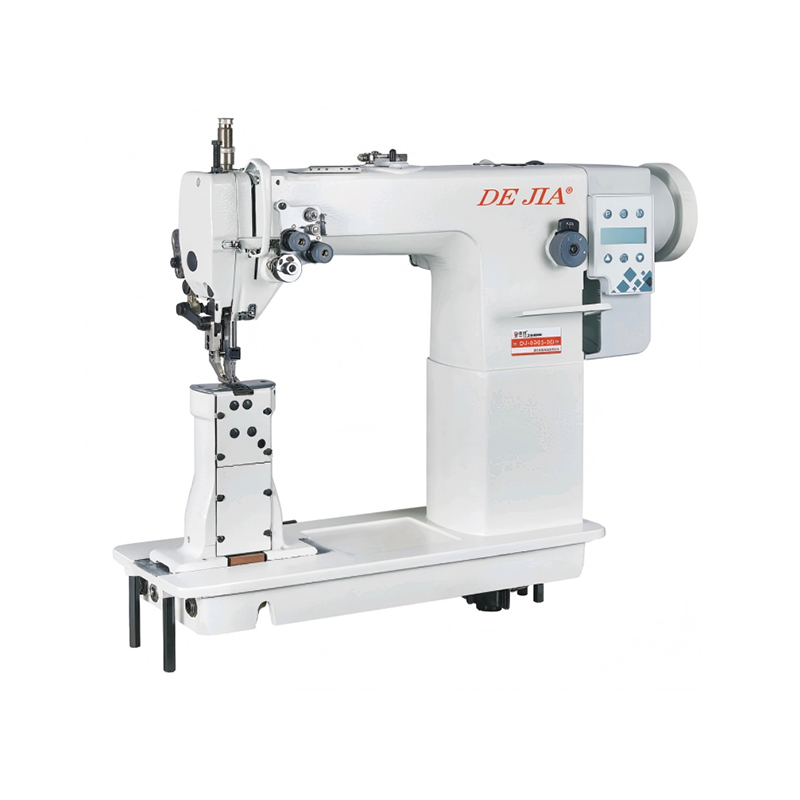
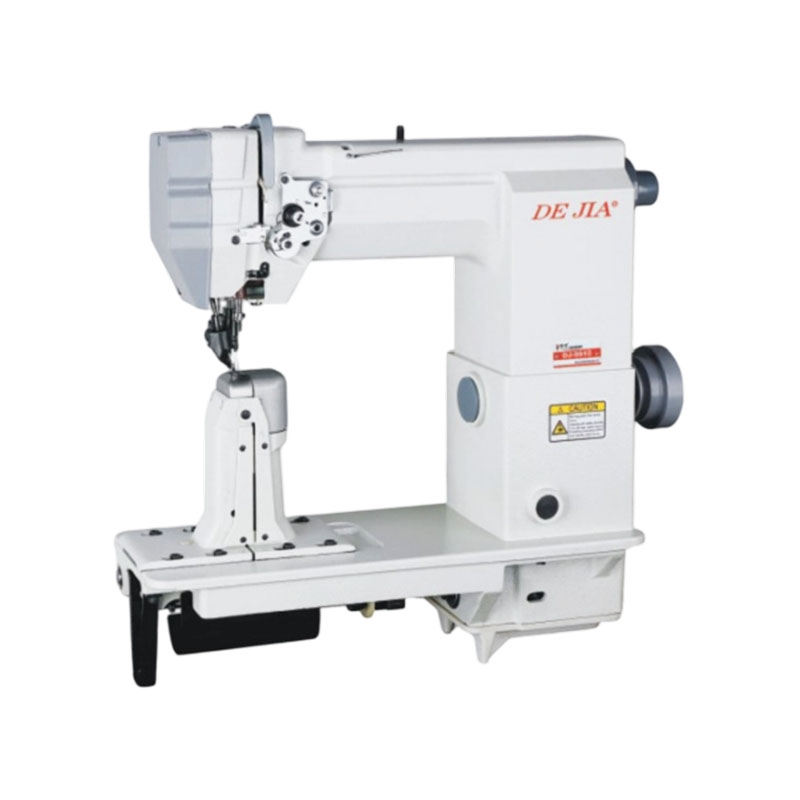
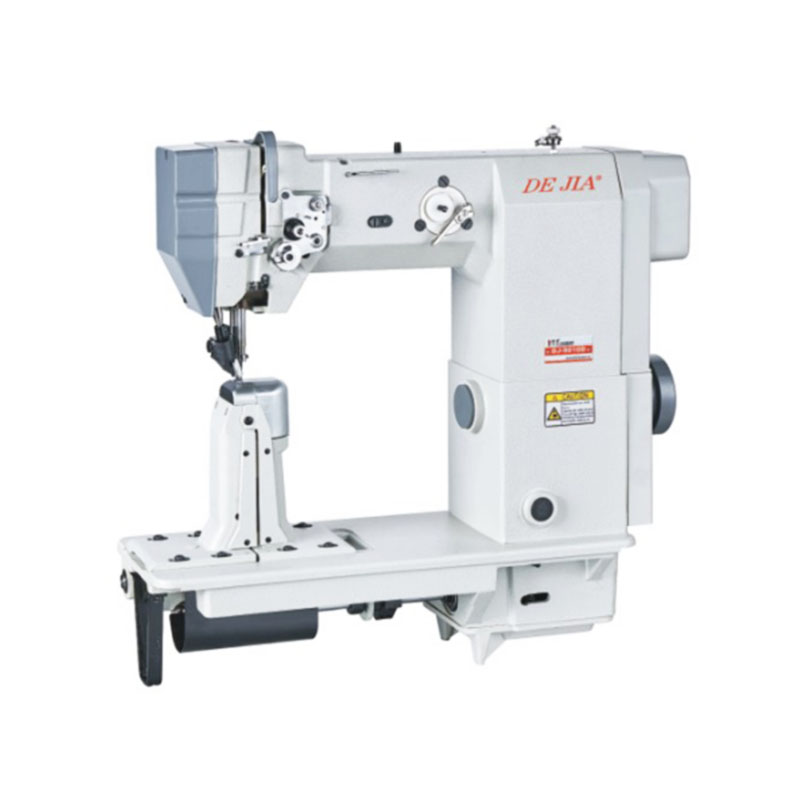
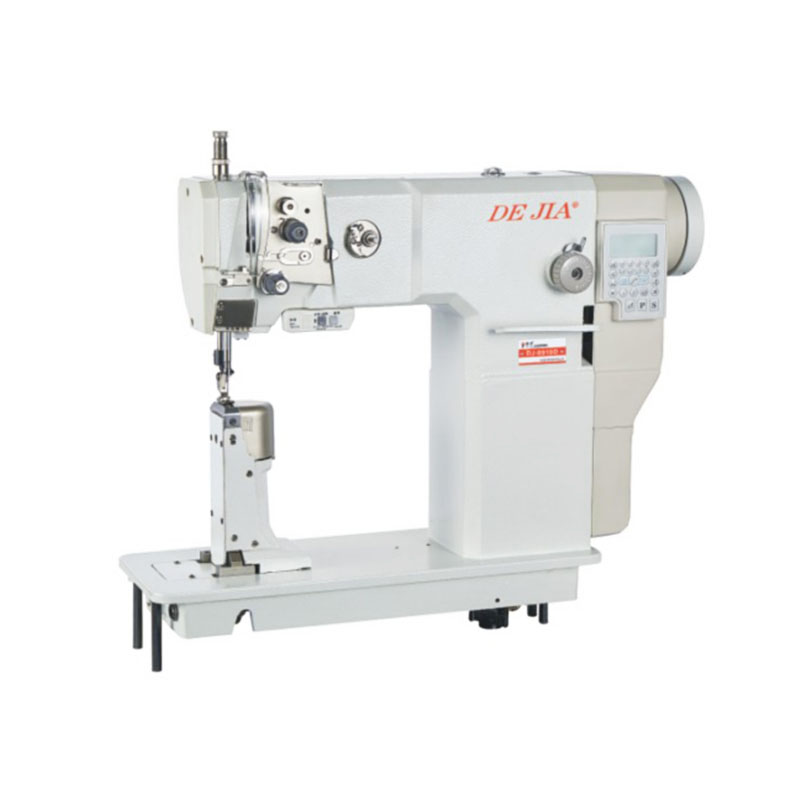
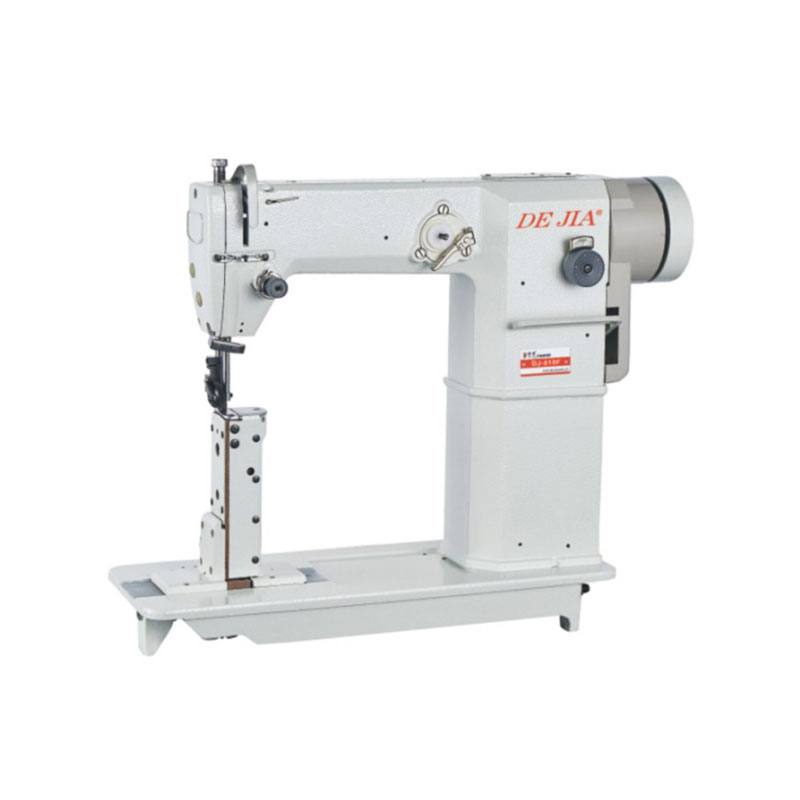
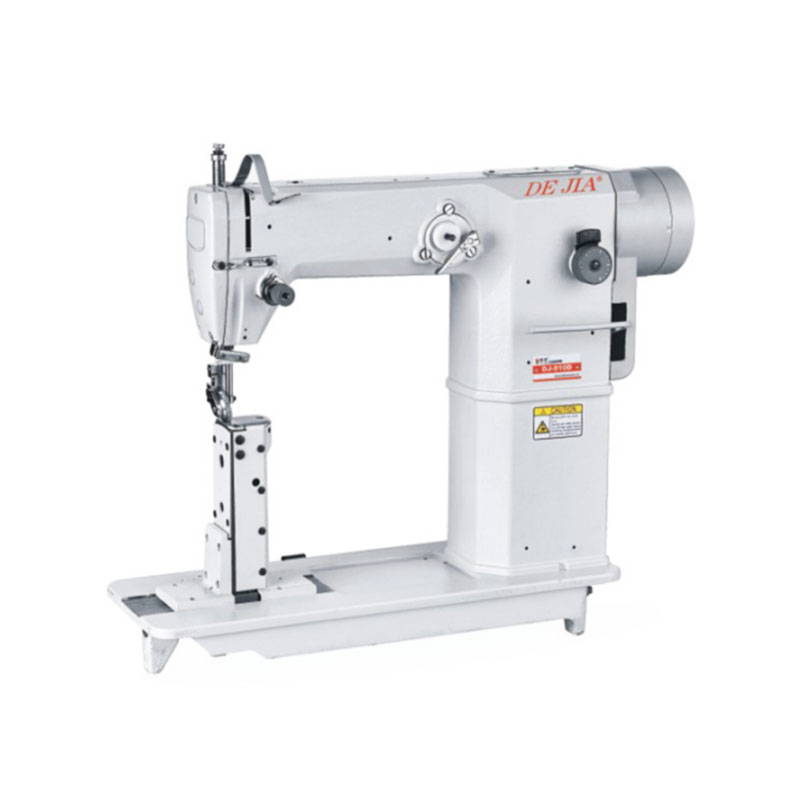
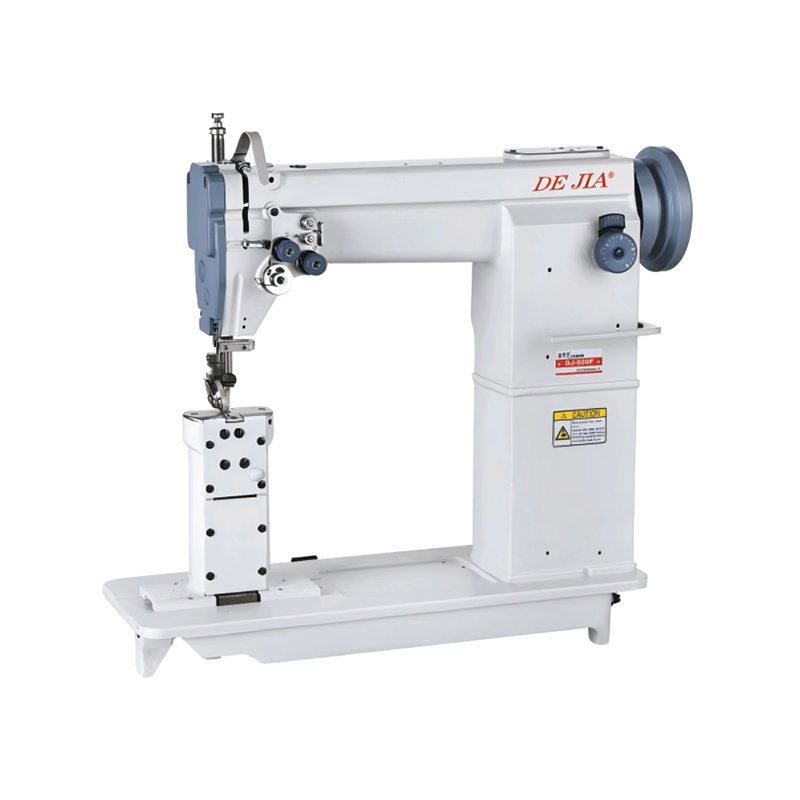
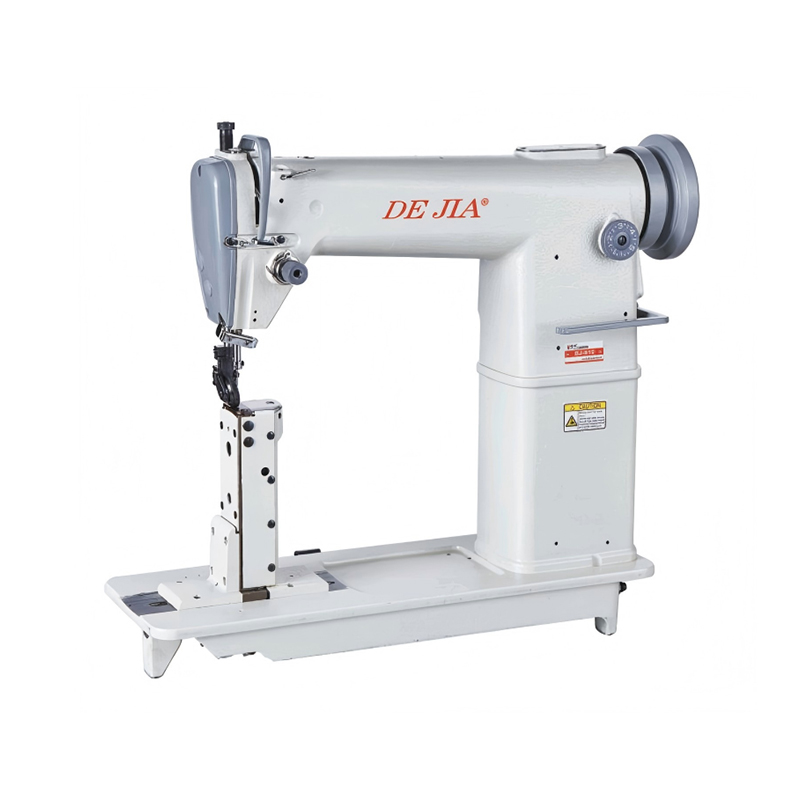
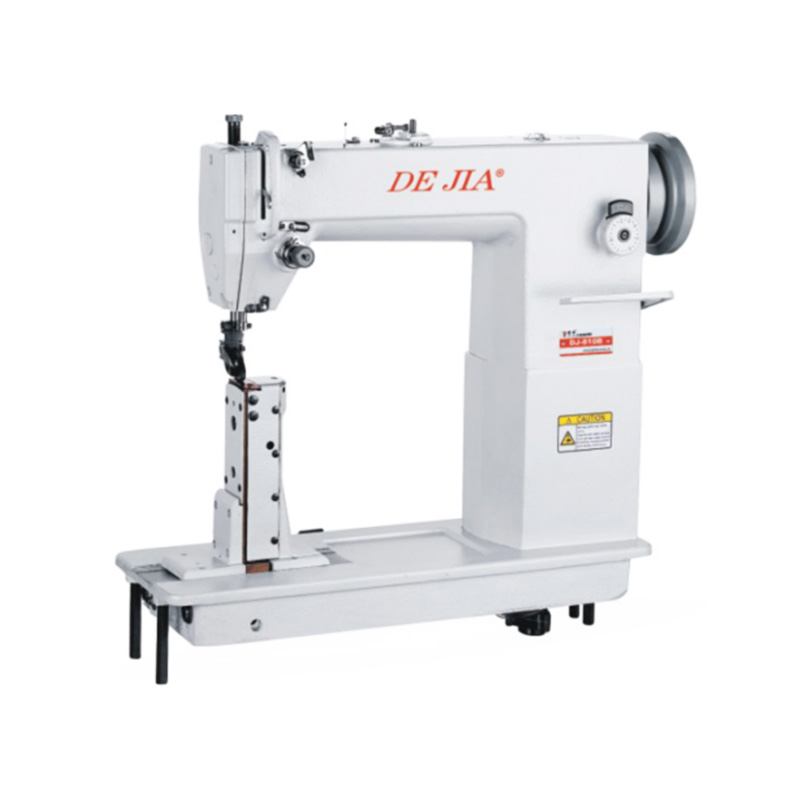
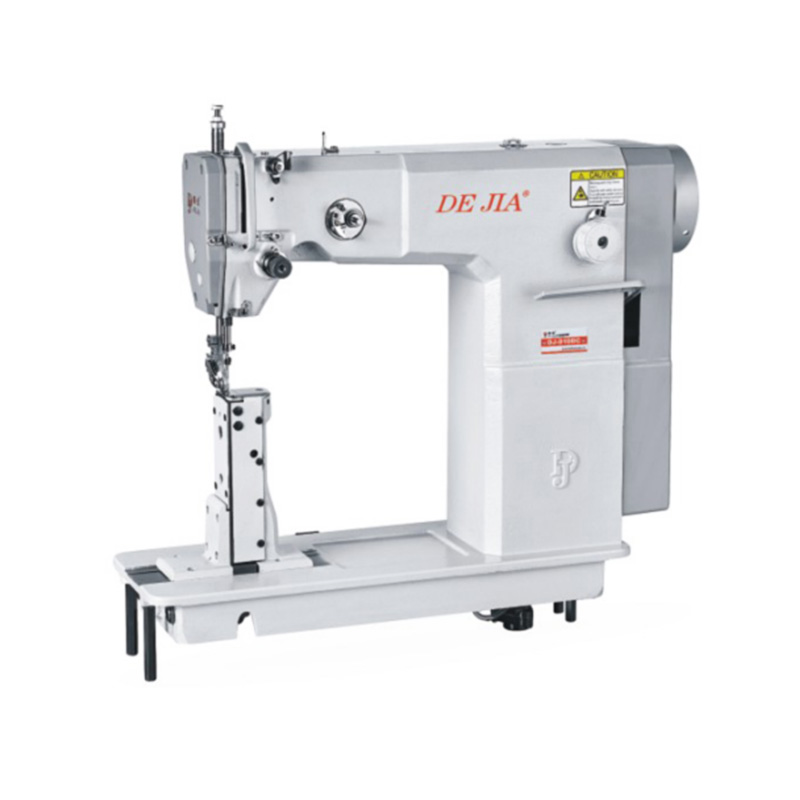
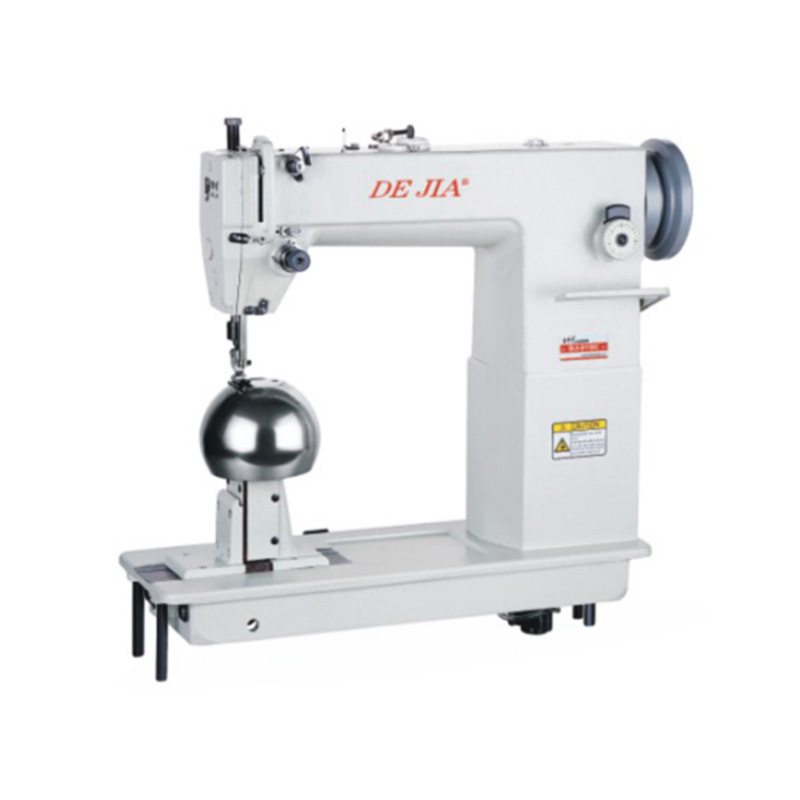
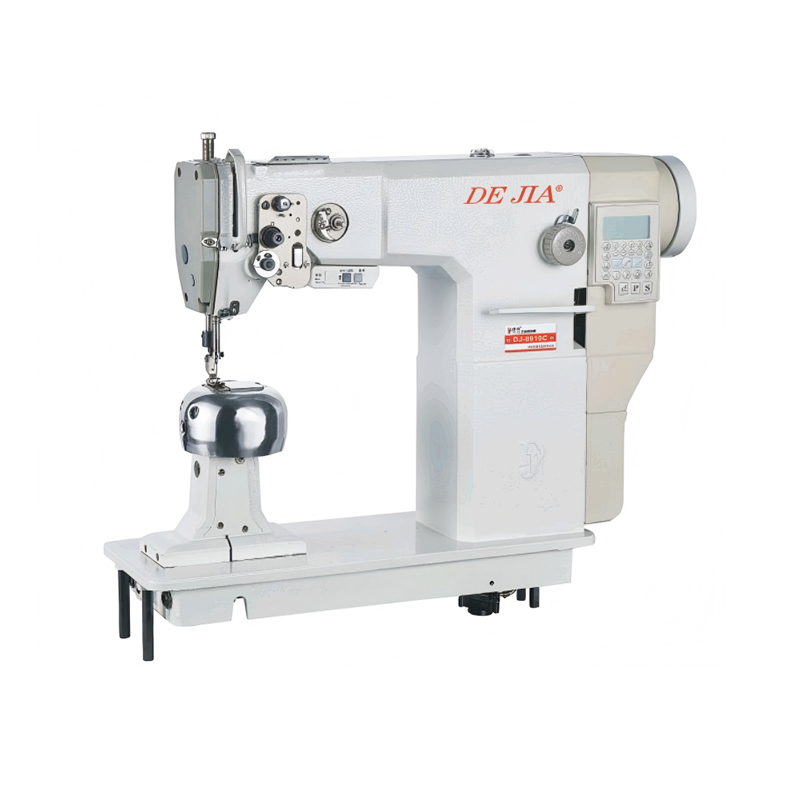
An industrial sewing machine specifically designed for 3D sewing, its table is replaced by a vertical post instead of a platform. This allows for 360° rotation to handle heavy or three-dimensional workpieces, making it a core production piece for manufacturers of leather goods, bags, footwear, and saddlery.
What is a Post Bed Sewing Machine?
The defining characteristic of a post bed sewing machine is a cylindrical post (typically 100–180 mm high and 50–70 mm in diameter) extending vertically from the table beneath the sewing head. The feed mechanism and rotary hook are located at the top of this post. Unlike conventional platform sewing machines, operators can insert three-dimensional workpieces such as shoe uppers, gloves, and handbags into the post for circular sewing without having to unfold and flatten the workpiece.
The machine is typically equipped with a combined feeding system (needle feed + presser foot feed + bottom feed) to ensure even feeding of materials that are difficult to slip, such as leather, PU fabric, canvas, and rubber. It is compatible with thick threads from Tex 40 to Tex 210, and the needle size range is generally #18–#26.
Applications of Post-Type Sewing Machines
- Leather Bag Manufacturing
For sewing the main body side seams and handles of handbags, crossbody bags, and briefcases. The leather thickness is typically 1.5–3.5 mm, with double layers. The post-type machine can rotate the workpiece 360° to complete the closed bag sewing without repeated disassembly and assembly.
The more typical application of post-type sewing machines is for sewing the uppers of athletic shoes and leather shoes. After the upper is formed, it cannot be laid flat and needs to be inserted into the post for rotation and sewing. It is a core machine model that replaces hand-sewing of shoes.
- Gloves and Small Leather Goods
Industrial gloves, cycling gloves, and leather gloves require stitching at the fingers and wrists within extremely curved surfaces. Short-post or thin-post sewing machines are the only industrial equipment suitable for this purpose.
- Equestrian Equipment and Pet Supplies
Saddles, reins, and belt buckles require high tension. Double-needle post sewing machines with Tex 135–210 thick thread are typically used, resulting in stitch strength far exceeding that of single-needle machines.
- Spherical Objects and Sports Equipment
Spherical surfaces such as soccer balls, glove-type protective gear, and baseball gloves require even stitching on curved surfaces. The rotating operation of post sewing machines is particularly advantageous for these products.
- Backpacks and Outdoor Gear
Heavy-duty post sewing machines are required for the strap anchor points and waist belt buckles of heavy-duty backpacks to ensure adequate stitch strength at stress points. They are suitable for high-strength fabrics such as 1000D nylon.
Why Choose? Procurement Rationale
- Industrial machine capable of completing closed curved surface stitching
For three-dimensional workpieces with fixed shapes, such as shoe uppers, molded handbags, and spherical surfaces, platform machines are physically inoperable. The column-mounted sewing machine is the only industrial solution for such processes, making this procurement decision irreplaceable.
- Compound feeding reduces scrap rates in leather sewing
Leather and PU materials are prone to interlayer misalignment (misalignment of needle paths between upper and lower layers) on simple bottom-feed machines, resulting in slanted stitches. A triple-layer compound feeding system can control interlayer errors within an acceptable range, directly reducing rework and waste costs.
- Thick thread sewing capability meets structural requirements
Strength-bearing parts such as bag handles, backpack straps, and equestrian harnesses require thicker thread (Tex 135 or higher) to meet tensile strength standards. Ordinary industrial flatbed sewing machines do not support this thread diameter. The column-mounted sewing machine comes standard with a large bobbin and wide needle groove, naturally supporting thick thread operation.
- Servo motors provide low-speed precision control advantages
Leather goods have a strong handcrafted feel, requiring low-speed fine-tuning of the needle direction in curved sections. Servo motors maintain sufficient torque in the low-speed range of 100–300 SPM, allowing operators to precisely control curved stitches and reduce uneven stitches caused by inertial overshoot.
- A wide range of models are available for precise matching to product lines.
From delicate small-part machines with a column diameter of 25 mm to heavy-duty machines with a diameter of 70 mm, and from column heights of 80 mm to 180 mm, precise matching can be made according to product category. For multi-product factories, machines with different column specifications can be combined to form flexible production lines, eliminating the need for each machine to handle all workpieces.
Frequently Asked Questions
What is the difference between a column sewing machine and a cylinder sewing machine (CylinderArm)?
They look similar but have different structures. The "arm" of a tube sewing machine is a horizontally extending cylinder with the shuttle at the end, suitable for tubular sewing of trouser legs, cuffs, etc. The "column" of a post sewing machine is vertically upward, with the shuttle at the top, suitable for inserting the workpiece from above for 360° rotation, and more suitable for three-dimensional workpieces requiring omnidirectional rotation, such as handbags and spherical surfaces. When purchasing, the choice should be based on the opening direction of the workpiece and the operator's habits.
When sewing leather, what type of presser foot and needle should a post sewing machine be used with?
When sewing thick materials such as vegetable-tanned leather and top-grain cowhide, it is recommended to use a Teflon-coated presser foot or a roller presser foot to avoid excessive friction between ordinary presser feet and the leather, which can cause scratches on the leather surface. The needle should be a leather-specific cutting point, with a needle size of #19–#23 depending on the material thickness, and works good with Tex 69–135 waxed thread. Do not use round-point needles to sew leather, as this can easily cause the leather to tear.
What are the key points for daily maintenance of a post-type sewing machine?
The key maintenance points for a post-type sewing machine are concentrated inside the post: the rotary hook and feed teeth are located at the top of the post, and the space is compact, requiring more frequent cleaning than a flatbed sewing machine. Typically, leather scraps and thread ends should be removed from inside the post after each shift to prevent dust accumulation from affecting the accuracy of the rotary hook. The tension of the upper and lower threads should be checked weekly, especially after changing to a different thread thickness. Sewing machine oil should be added to the guide rails on the outer wall of the post weekly; never use ordinary machine oil as a substitute.


 Español
 عربى
عربى