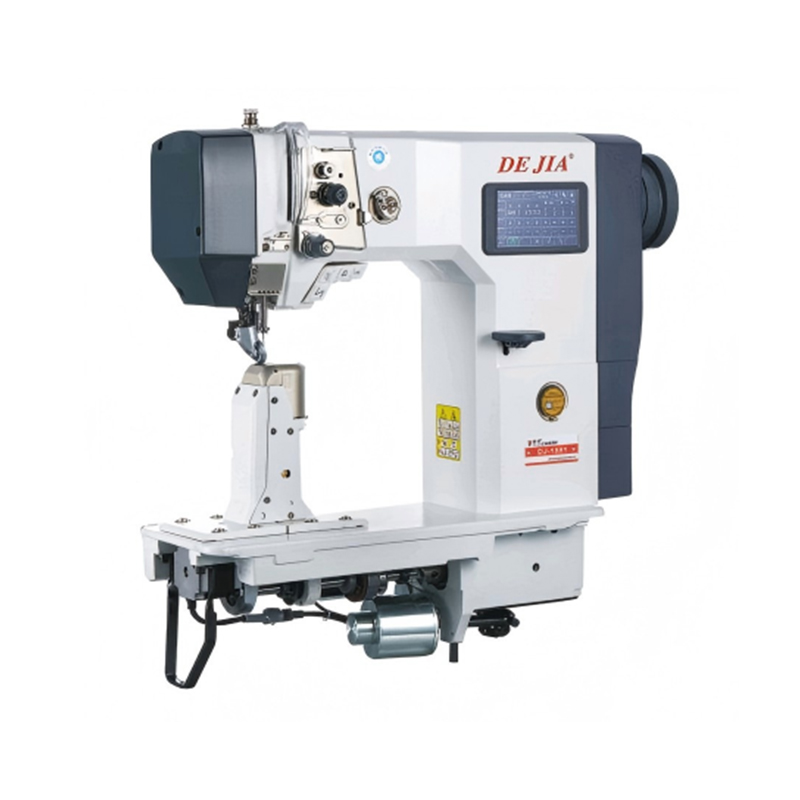
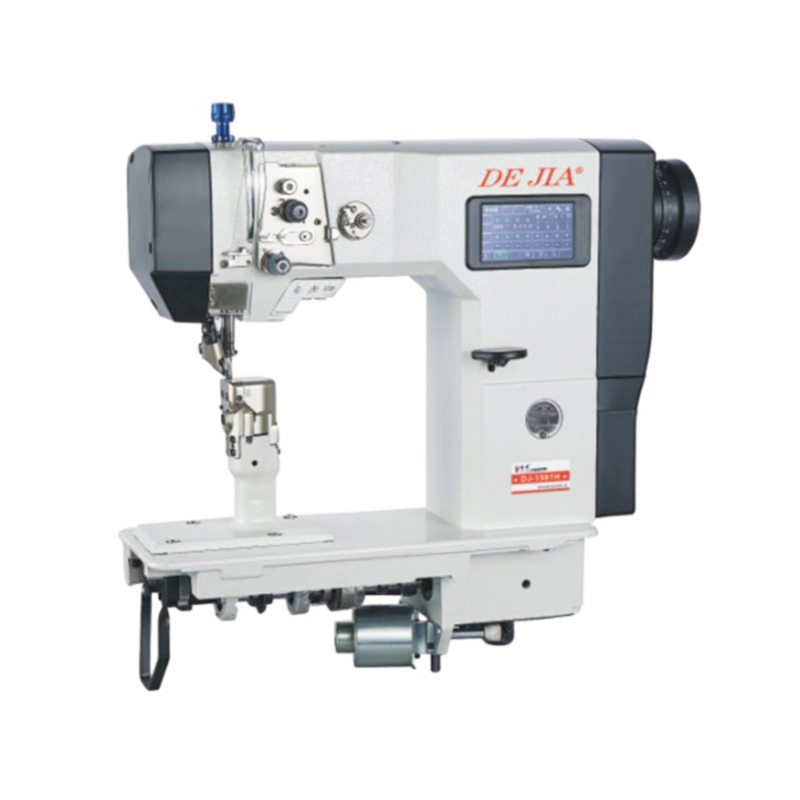
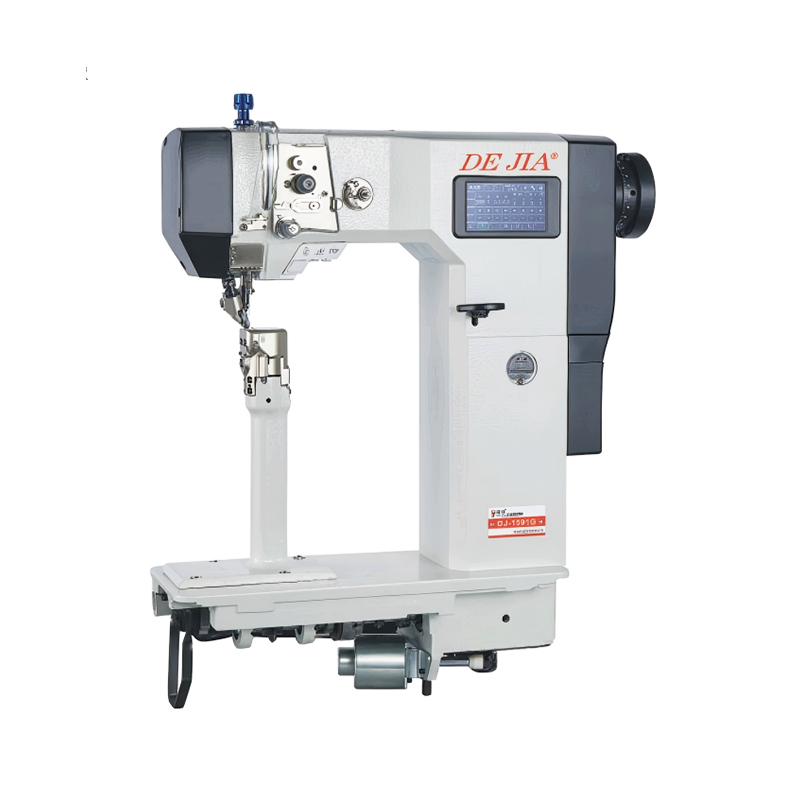
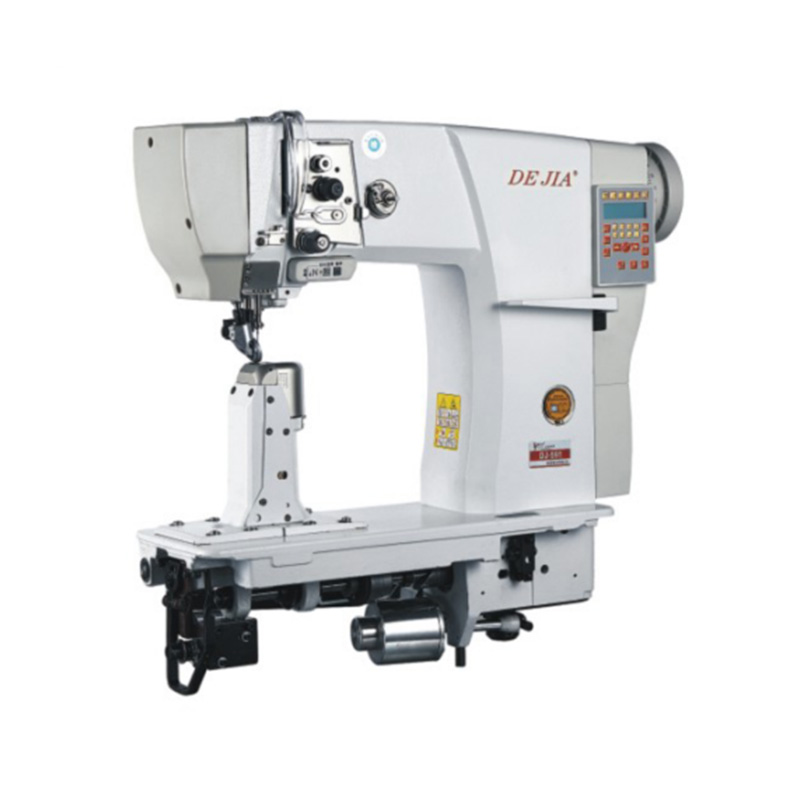
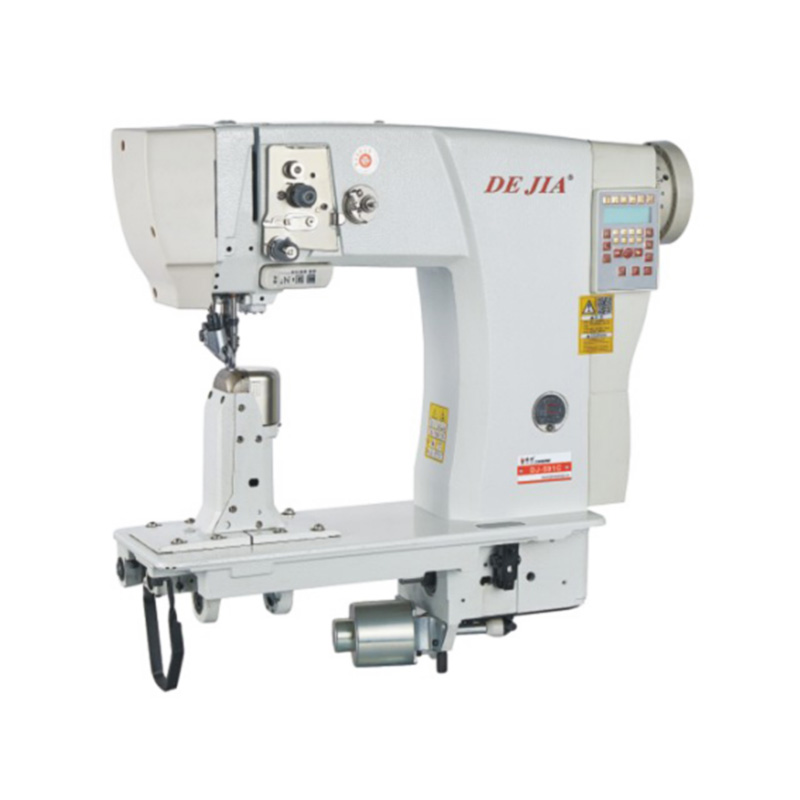
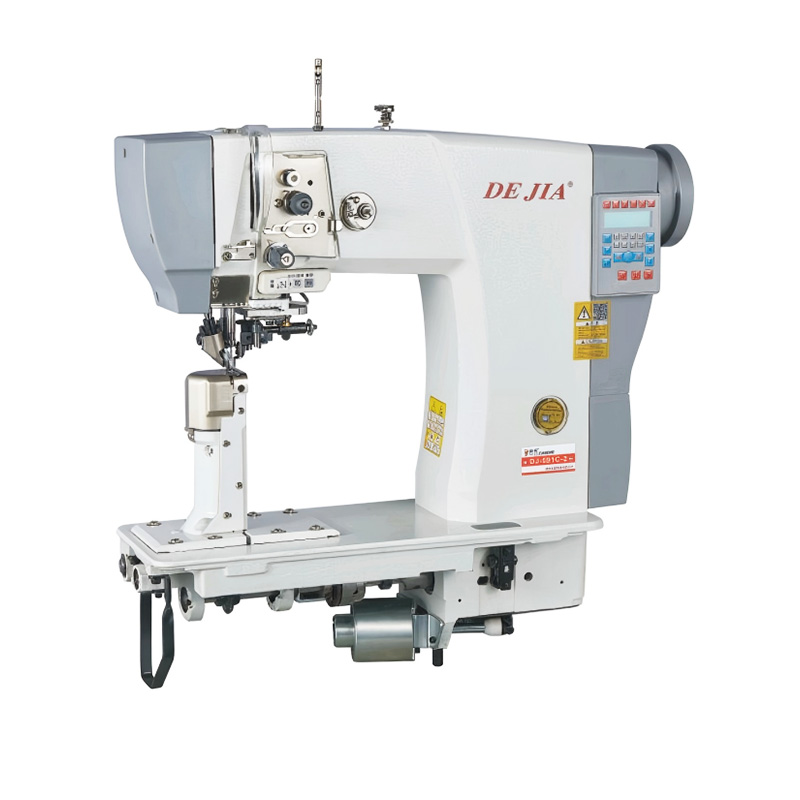
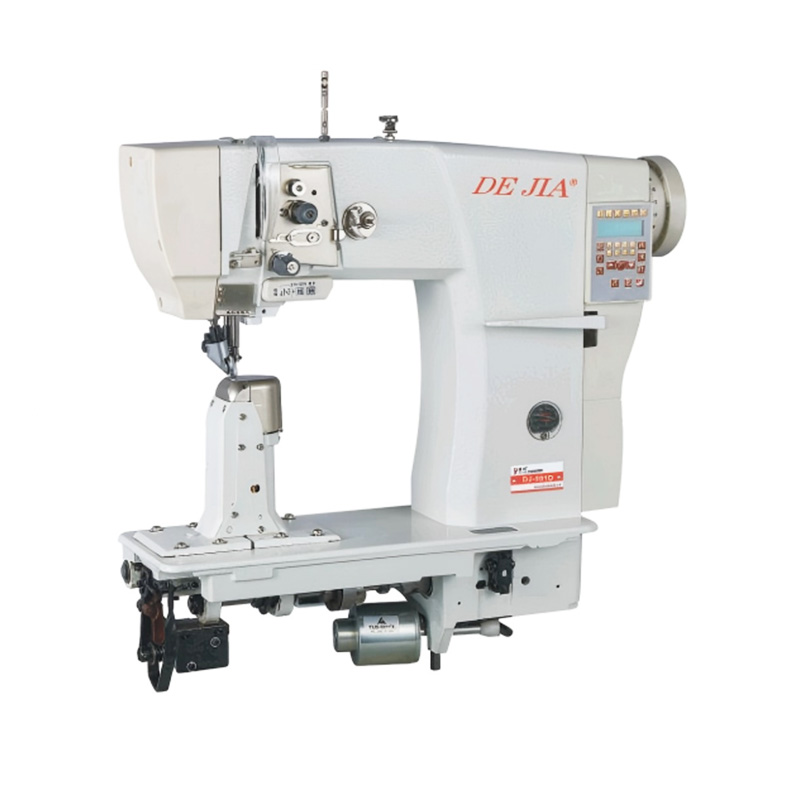
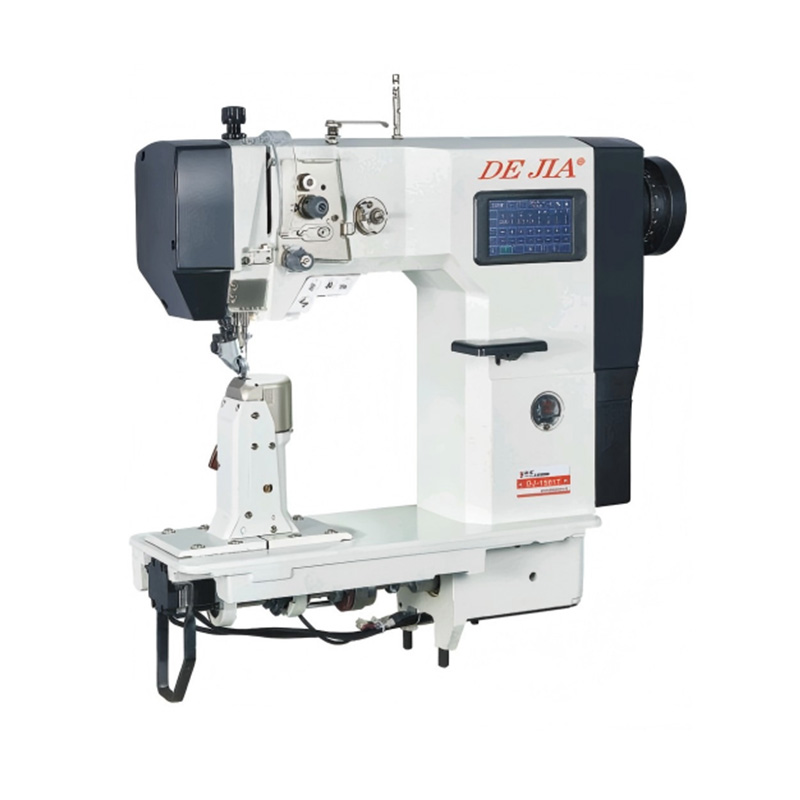
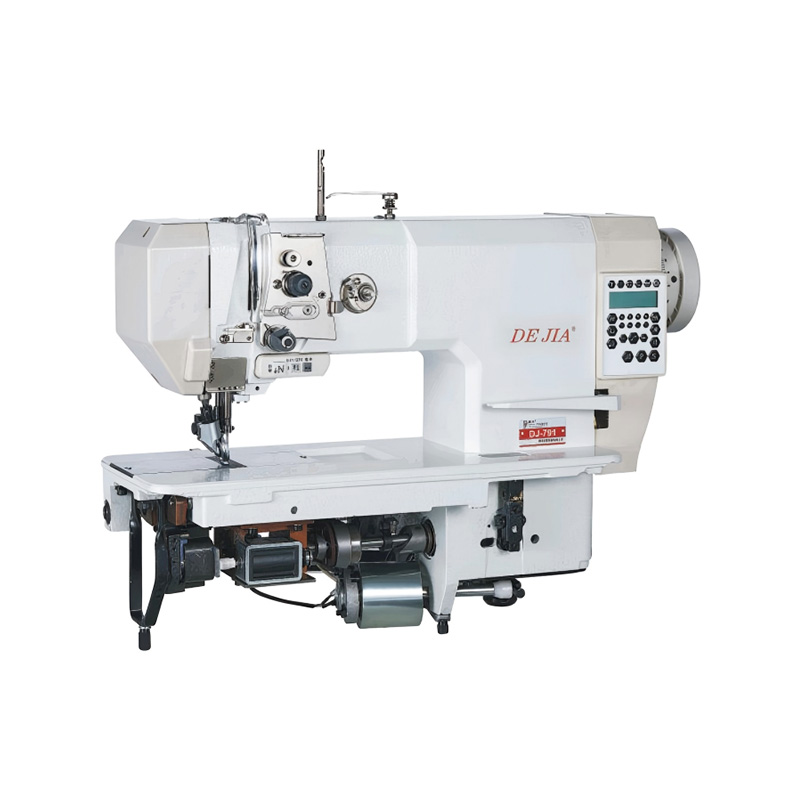
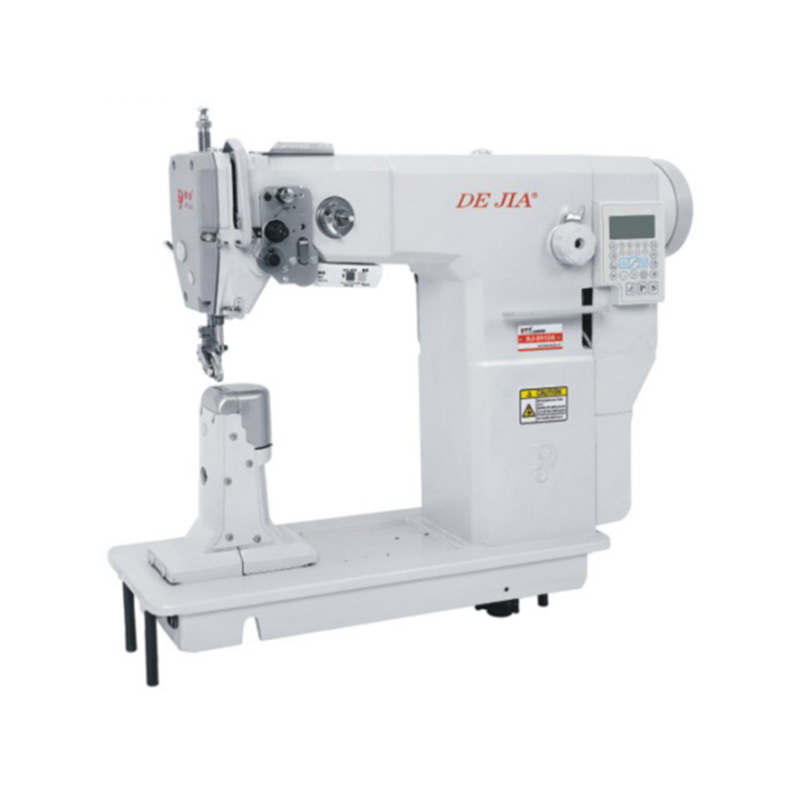
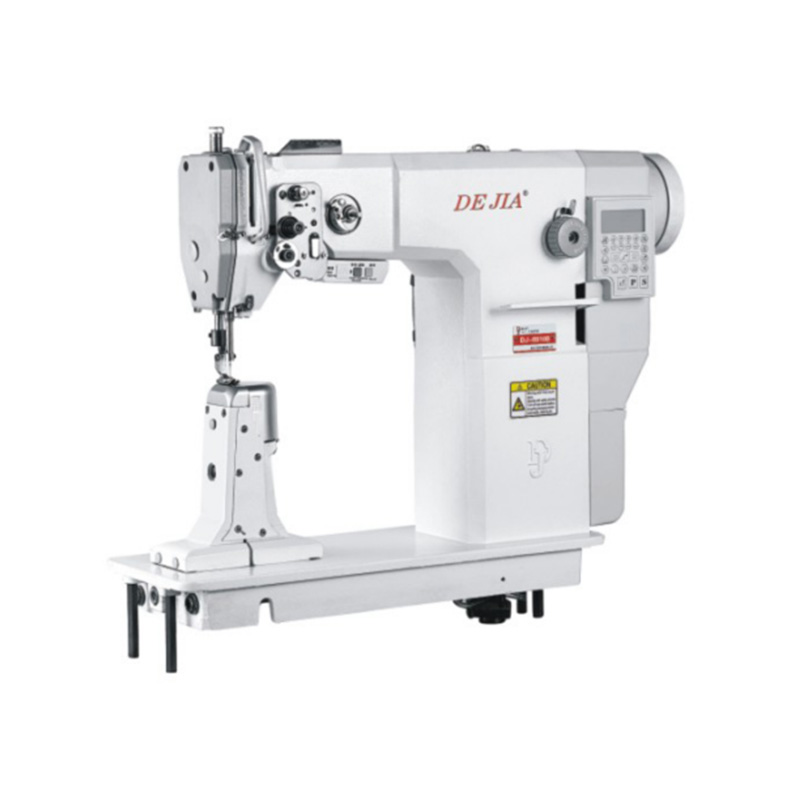
Single-needle industrial sewing machines are the more widely shipped and applicable industrial sewing equipment in the global apparel and textile manufacturing industry. Using a single needle to create a lockstitch (ISO 301 stitch), and with precise control via a stepper motor or a fully automatic operating system, they are suitable for a wide range of sewing needs, from lightweight shirt fabrics to medium-weight denim and workwear. They are a basic configuration model for production lines of factories of all sizes.
What is a Single-Needle Industrial Sewing Machine?
A single-needle industrial sewing machine is an industrial-grade flatbed sewing machine equipped with a single needle that interweaves the upper and lower threads to form a lockstitch (ISO 301 Stitch Type). Unlike the two rows of parallel stitches on a double-needle machine, a single-needle machine forms only one thread at a time, resulting in a clean, symmetrical stitch. It is the standard equipment for the more basic processes in garment manufacturing, such as joining, pressing, and sealing.
Industrial single-needle knitting machines feature frames made of cast iron or high-strength cast aluminum, driven by 400–750 W servo motors or stepper motors, achieving speeds of 4,000–6,000 SPM. They support 8–16 hours of continuous operation per day, with a typical lifespan of over 10 years. Control systems range from basic mechanical to fully automatic digital control panels, catering to factories with varying levels of automation.
Control System Classification: From Mechanical to Fully Automatic
The core difference between single-needle industrial machines lies not in their mechanical structure, but in the level of automation in their control systems. The following four levels cover the mainstream configurations in the market:
Clutch motor + dial adjustment; simple structure, inexpensive parts, suitable for low-cost bulk purchases or markets sensitive to parts.
Precise speed control, high torque at low speeds, 30%–50% energy savings; currently the mainstream choice for factories, balancing cost and performance.
Precise single-step angle control, with fully digitalized needle stop position, start/finish stitches, and one-click parameter recall for style changes, suitable for small batches with multiple SKUs.
Automatic thread trimming, automatic reverse stitching, automatic presser foot lifting, and stitch program storage small manual intervention, suitable for highly standardized production lines.
Purchase Recommendation: For factories with a monthly output exceeding 5,000 pieces and more than 10 SKUs, it is recommended to prioritize models equipped with a stepper motor and fully automatic thread trimming. No manual parameter readjustment is required during style changes, reducing single style change time from 15–20 minutes to 2–3 minutes, which is particularly crucial for fast fashion supply chains.
Application Scenarios of Single-Needle Industrial Sewing Machines
- Shirts and Formal Garments
The front seam of shirts, collar seams, and cuff stitches all require a single-needle lockstitch machine with fine and even stitches. Lightweight fabrics (80–120 g/m²) paired with a 5,500 SPM high-speed single-needle machine can complete the main sewing process for 600–900 shirts per shift, making it the more frequently used machine configuration on garment production lines.
Workwear fabrics typically weigh between 200–350 g/m², and the need for stable feeding due to multiple layers and seams is crucial. Single-needle machines equipped with synchronous feeding systems prevent thicker fabrics from "crawling," ensuring seam alignment, making them the standard procurement model for mass production of workwear, school uniforms, and workwear.
- Fast Fashion and Multiple SKUs in Small Batches
Fast fashion supply chains have high changeover frequencies. Stepper motor single-needle machines support digital storage and one-click recall of stitch length, backstitch count, and stop position, reducing changeover setup time from over 15 minutes with traditional models to 2–3 minutes, significantly improving efficiency for factories with multiple styles and small orders.
- Bag and Bag Flat Panel Sewing
The initial sewing of flat panels such as handbag outer pieces and backpack main panels typically utilizes a heavy-duty single-needle industrial sewing machine with a large bobbin. This allows for continuous sewing of thicker fabrics like PU leather and Oxford cloth, reducing downtime for bobbin changes and maintaining a high production rate.
- Home Textiles and Bedding
The main sewing process for sheets, duvet covers, and pillowcases requires high-quality stitches with even and symmetrical stitches on both sides. Fully automatic single-needle machines automatically trim the thread ends, eliminating manual trimming and saving 1-2 auxiliary workers per shift on a home textile production line.
Purchase Reasons
- Largest Global Shipment, more Versatile Spare Parts
Single-needle industrial flatbed sewing machines are the more widely used industrial sewing machine type globally. Core consumable parts such as rotary hooks (DB series), presser feet, and feed dogs are readily available in major textile production areas worldwide. Compared to dedicated machines, the time cost of downtime for spare parts is extremely low, making it the more reliable option for reducing the risk of unplanned production line downtime.
- Stepper motors improve precision and reduce human error
Stepper motors precisely control the needle bar movement with a fixed step angle (typically 1.8°/step), resulting in small error in needle stop position. Combined with fully automatic backstitching, the start and end stitch heights of each product are consistent. Compared to mechanical machines that rely on operator feel, motor precision control can reduce the stitch length deviation within ±0.1 mm for the same batch of products, directly impacting the quality inspection pass rate of export orders.
- Fully automatic functionality reduces operator skill dependence
Fully automatic models integrate automatic thread trimming, automatic backstitching, and automatic presser foot lifting. Operators only need to focus on guiding the fabric direction; the start and end stitches are all handled automatically by the machine. New employee training time can be shortened from 7–14 days for ordinary models to 3–5 days, resulting in significant labor cost optimization for factories with high labor turnover.
- Quantifiable energy-saving benefits of servo/stepper motors
Compared to traditional clutch motors, servo or stepper motors consume almore no power at idle and low speeds, reducing overall energy consumption by 30%–50%. For factories with more than 30 sewing machines, monthly electricity cost savings after servo conversion typically range from hundreds to thousands of yuan, with the equipment price difference recoverable in 12–24 months.
- Stable stitch quality, compatible with more export standards
ISO 301 lockstitch is the more widely recognized basic stitch type in international garment quality inspection standards. It features symmetrical stitches on both sides, stable structure, and is not prone to unraveling. Purchasing single-needle industrial machines eliminates the need for additional special stitch certifications, directly meeting the product quality requirements of mainstream European and American buyers, lowering the certification threshold for new orders.
Frequently Asked Questions
What specific functions does "automatic" mean in the context of a fully automatic single-needle sewing machine? What should I confirm before purchasing?
The definition of "fully automatic" varies slightly between suppliers. You should confirm each function before purchasing:
- Automatic thread trimming – Automatically cuts the top and bottom threads at the end of sewing (standard)
- Automatic backstitching – Automatically backstitches and reinforces the stitch at the beginning and end (standard)
- Automatic presser foot lifting – The presser foot automatically lifts after sewing (optional on some models)
- Needle position memory – Fixes the needle position when stopping (affects cornering efficiency)
Only models with all four of these functions are truly fully automatic. It is recommended to list these functions in the purchase contract to avoid discovering additional activation fees after receiving the product.
How to differentiate between single-needle and double-needle sewing machines? When must a single-needle machine be chosen?
- A single-needle machine creates a single stitch, suitable for processes where appearance is critical, such as seams, necklines, and cuff seams, or where only one stitch is visible after folding.
- A double-needle machine creates two parallel stitches simultaneously, suitable for processes requiring decorative parallel stitches, such as topstitching on jeans side seams and double topstitching on workwear
A single-needle machine must be chosen in the following situations: when the stitch will be hidden on the inside after sewing (e.g., side seams); when the fabric is too thin for the tension of double needles (e.g., shirt fabrics); or when the product design only allows for a single-stitch appearance. more garment factories have 3–5 times more single-needle machines than double-needle machines. Single-needle machines are the foundation of the production line, while double-needle machines are a specialized supplement.


 Español
 عربى
عربى