Industry knowledge
This guide provides factory-level procurement information for single-needle industrial sewing machines in industries such as garment manufacturing, bags and leather goods, and automotive interiors. Single-needle industrial sewing machines represent the world's largest category of industrial sewing equipment. Primarily using lockstitch, they are reliable, have low maintenance costs, and are flexible in design, making them a fundamental component of small to medium-sized production lines.
What is a single-needle industrial sewing machine?
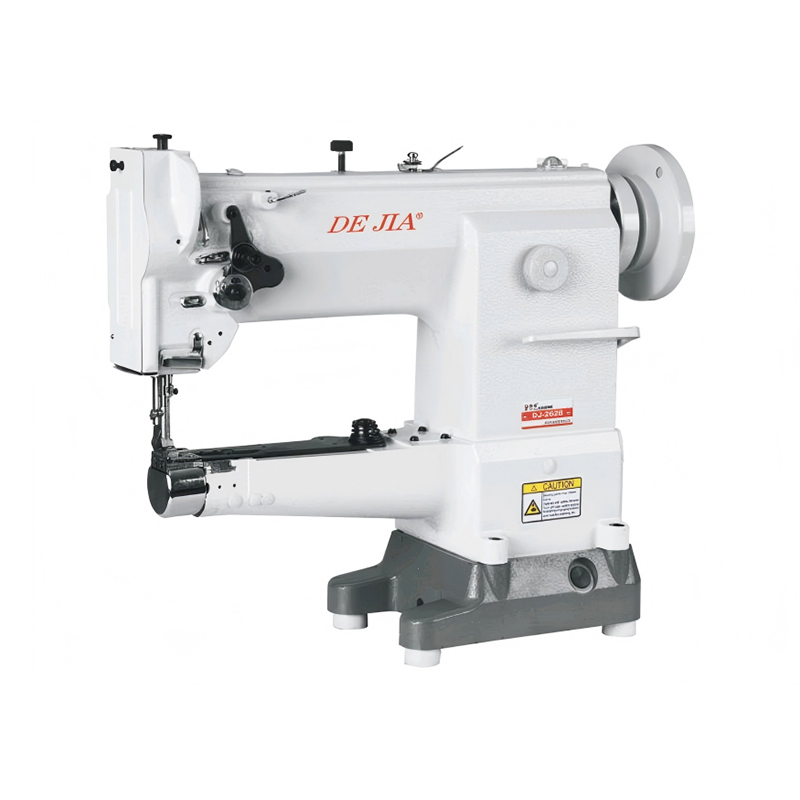
A single-needle industrial sewing machine is a sewing machine equipped with a single needle, driven by an industrial-grade motor, and designed specifically for continuous, high-volume production. Unlike consumer-grade machines, industrial machines use cast iron or steel for the frame, presser foot, and feed teeth. The spindle speed is typically between 3,500 and 5,500 RPM, allowing for continuous operation without overheating.
Its core stitch is the 301 lockstitch—the top and bottom threads interlock and lock within the fabric, resulting in a consistent appearance on both sides. The stitch is strong and resistant to fraying, making it the preferred choice for high-demand applications such as garment manufacturing, bags, and automotive seat production. Compared to chain stitch machines, lockstitch machines do not experience chain-reaction thread breakage when the thread breaks under stress, resulting in more consistent quality.
Based on the transmission method, the current market mainstream falls into two categories: energy-saving models equipped with direct-drive servo motors, and models using traditional belt drives with clutch motors. Direct-drive models are quieter, save approximately 50-70% on energy, and offer more responsive control, making them the preferred choice for new production lines.
In which industries are single-needle industrial sewing machines used?
- Apparel Manufacturing: Main seams, darts, and side seams of shirts, trousers, and jeans. With automatic thread trimming, changeover time between processes can be reduced by approximately 30%.
- Bags and Leather Goods: Assembly of leather or canvas parts for handbags, briefcases, belts, etc. Integrated feeder models can handle 8-10 mm thick leather, preventing slippage.
- Automotive Interiors: Seat covers, door panels, and dashboard upholstery. Requires uniform stitching and consistent tension; integrated feeder models are typically used for composite materials.
- Home Textiles and Bedding: Large-format sewing of duvet covers, pillowcases, sofa covers, etc., paired with a large shuttle sewing machine, reduces the frequency of thread changes and improves continuous work efficiency.
- Footwear Manufacturing: Sewing of shoe uppers, insoles, and linings. The tubular bed sewing machine facilitates operation on curved areas and is equipped with a dedicated curved needle presser foot to accommodate irregularly shaped parts.
- Industrial Packaging and Nonwovens: Sealing and sewing woven bags, protective clothing, and filter bags. Chain stitch conversion machines can handle agricultural fibers and synthetic nonwoven fabrics.
Why Purchase a Single-Needle Industrial Sewing Machine?
- High Production Line Flexibility and Low Changeover Costs
By changing the needle plate, presser foot, feed teeth, and hook, the same machine body can be adapted to various fabrics from thin yarns to thick denim, without the need for a complete machine replacement. Compared to multi-needle machines, single-needle machines offer more direct adjustment of process parameters, making them suitable for flexible production lines with small batches and diverse product varieties.
- Direct-drive servo motors significantly reduce energy consumption
Direct-drive models operate only when the foot pedal is pressed, saving 50-70% on electricity compared to traditional clutch motors. For factories operating 8-16 hours daily, the electricity savings can recoup the equipment price difference within 1-2 years.
- Automatic thread trimming increases output by approximately 30%
Models equipped with an automatic undertrimmer eliminate the need for manual thread trimming. Operators can trim the thread and position the needle simply by moving the heel of their foot. Real-world testing shows this can reduce the changeover interval for each product by approximately 30%, significantly increasing shift output.
- Simple maintenance structure and highly interchangeable spare parts
The mechanical structure of single-needle lockstrap knitting machines is highly standardized. Needle plates, presser feet, and bobbins are highly interchangeable across mainstream models. The parts supply chain is mature, and maintenance time is short, making it suitable for large-scale production environments sensitive to equipment downtime.
- Stitch strength and stability meet export quality standards
The 301 lockstitch will not chain apart after the threads break at both ends. It is the more common permissible stitch type in the inspection standards of European and American buyers (such as ASTM D1683), suitable for OEM/ODM orders from high-requirement brand customers.
Frequently Asked Questions
Can a single-needle lockstitch machine and an overlock sewing machine be substituted for each other?
No, they cannot be directly substituted. Lockstitch machines produce 301 stitches, which have a consistent appearance on both sides and high stitch strength, used for sewing the main structure. Overlock sewing machines produce multi-thread overlock stitches (such as 504/514), mainly used to wrap the fabric edges to prevent fraying and to provide some elasticity.
More garment factories use both types of machines together: the lockstitch machine handles the main seams, and the overlock sewing machine handles the finishing. The division of labor is clear, and it is not recommended to replace one with the other.
What is the substantial difference between a Unison Feed Lockstitch and a regular flatbed sewing machine?
Ordinary flatbed sewing machines rely solely on bottom feed teeth to advance the fabric. When encountering multi-layered, thick materials or smooth leather, misalignment ("material slippage") can easily occur between layers. Integrated feeders address this by adding an upper feed mechanism and synchronous linkage with the presser foot, enabling three-way synchronized advance. This ensures consistent feed for each stitch, making it particularly suitable for applications with stringent requirements, such as leather stitching and automotive seat covers. It's not necessary for all scenarios; it's essential for leather and thick fabrics.
Is an automatic thread trimming (Undertrimmer) function a must-have on every machine?
For garment factories that operate on a piece-rate basis and prioritize shift output, automatic thread trimming is almore indispensable: it eliminates the time and effort of manual thread trimming, reducing operator fatigue. However, in scenarios involving sewing large-format products (such as canvas tarpaulins and bedding), where each piece has long seams and infrequent changes, the benefits are not significant. It can be selected based on product type, rather than being standard across all lines.


 Español
 عربى
عربى